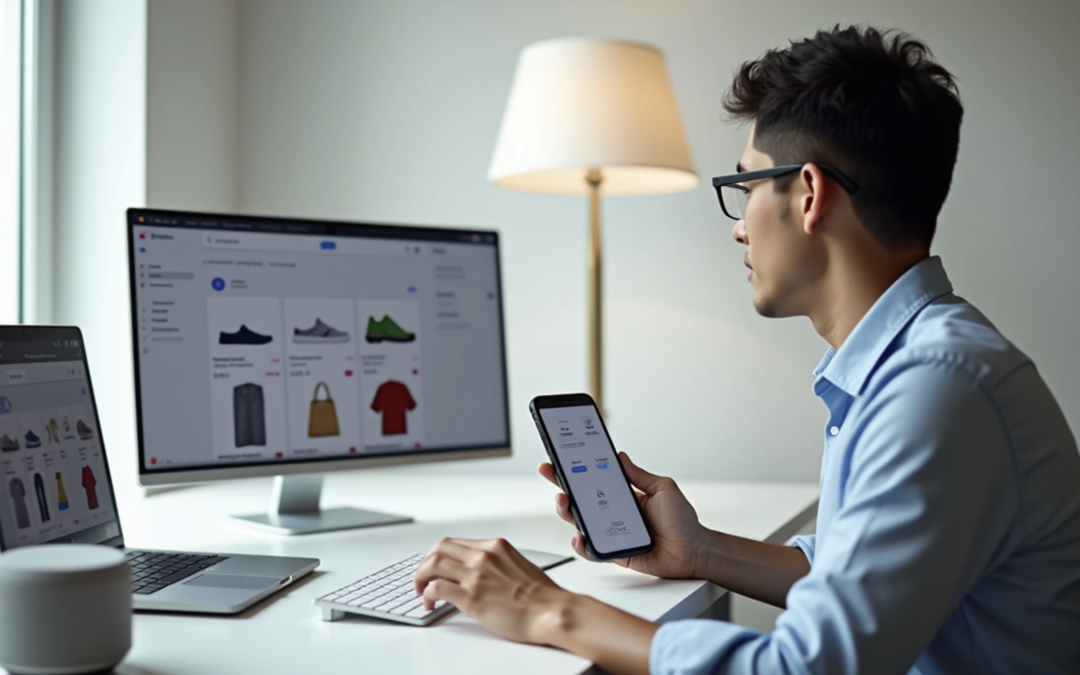

Smart speaker users are changing how we shop – more than 60% of them use voice search to buy products. Google Shopping Actions became a key platform for retailers who wanted to tap into this trend.
The program let merchants sell their products right through Google’s ecosystem with a universal cart experience. The program’s commission rate averaged 12%, which was better than Amazon’s 15% fee[-4]. Target’s success story shows the program’s value – the company saw its baskets grow by 20% on Express and basket sizes jump by 30%. But Google ended the Shopping Actions project last year to focus on creating direct connections between shoppers and merchants.
This piece walks you through what Google Shopping Actions was and how it stood apart from standard Google Shopping. You’ll also see what options you have for your e-commerce strategy in 2025. The commission structure, benefits of integration, and key takeaways from this program can help shape your current selling strategy.
What is Google Shopping Actions and how does it work?
Google Shopping Actions transformed e-commerce with a smooth shopping experience in Google’s ecosystem. The program connected product discovery to purchase and changed how people shop online.
Definition and purpose of the program
Google Shopping Actions (GSA) is defined as “a shopping program that allows retailers to surface their products across different Google platforms”. The US launch started as “Buy on Google” or “Google Express” to compete with Amazon’s marketplace dominance.
GSA’s main goal was to make buying easier. Customers could purchase products directly through Google’s interfaces without going to merchant websites. Traditional Google Shopping charged per click, but Shopping Actions used a pay-per-sale model – retailers paid only after a sale. The service took 5% to 15% commission based on product type, averaging 12%.
Sellers found great advantages with the program compared to Amazon’s strict policies. Google billed retailers after purchases instead of storing products. This gave merchants better control of customer service, returns, and delivery.
Where GSA listings appear
GSA products showed up on multiple platforms:
- Google Search: Products showed in sponsored shopping units at the top of search results pages
- Google Shopping: Listings appeared within the dedicated shopping.google.com marketplace
- Google Assistant: Voice shopping through mobile devices and Google Home
- Google Images: Products appeared directly within image search results
- YouTube: Integration was planned but ended before full implementation
This approach created excellent visibility through voice commerce. More than 60% of regular smart speaker users shop through voice search.
How the universal cart and checkout work
The universal cart was the life-blood of GSA. Customers added products from different retailers into one basket and checked out in a single transaction. Google stated: “Shopping Actions enables a frictionless shopping experience by using a shareable list, universal shopping cart, and instant checkout with saved payment credentials, allowing customers to easily turn browsing into buying”.
Here’s how it worked: A shopper could look for hand soap, add Target’s product to their cart, and use Google Home to order aluminum foil. Both items could be bought together through Google’s checkout. This system eliminated the hassle of switching between retailer websites and multiple carts.
The checkout process used saved payment details for quick purchases. Cart abandonment rates dropped compared to regular multi-site shopping. Google processed transactions while retailers handled shipping and delivery. This partnership worked well for everyone involved.
Google Shopping Actions vs Google Shopping: Key differences
The difference between Google Shopping and Google Shopping Actions is vital for sellers who want to boost their online presence. These platforms work on different principles but work well together when used properly.
Checkout location and user experience
The biggest difference shows up in where buyers complete their purchase. Standard Google Shopping sends customers to your website to complete their purchase through your checkout system. Google Shopping Actions keeps shoppers on Google’s platform from start to finish.
GSA offers a universal shopping cart that lets customers buy items from multiple retailers in one transaction. This creates a smooth buying experience. The checkout process works quickly because Google saves payment details. Buyers can make almost instant purchases without typing their credit card information repeatedly.
This optimized approach delivers real results. Ambush Board Co. saw amazing results when they added both programs to their existing Shopping Ads. Their conversions jumped 115% while total revenue grew by 104%. The universal cart also helps customers add related items, which makes basket sizes and order values bigger.
Payment model: pay-per-click vs pay-per-sale
The most important difference lies in how you pay Google. Traditional Google Shopping uses a pay-per-click (PPC) model. You pay each time someone clicks your ad, whatever the outcome of that click. So you might end up paying for clicks that don’t turn into sales.
Google Shopping Actions takes a different approach with its cost-per-sale (CPS) model. You only pay when someone buys something. Commission rates usually run between 5-20% based on what you’re selling, with most sellers paying around 12%. This model removes upfront ad costs, which works great for sellers who convert well.
The commission fees might look high, but the numbers tell a compelling story. Ambush Board Co.’s revenue doubled after adding Shopping Actions, even with an 80% rise in costs.
Integration with Google services
Both platforms exploit Google’s massive reach in different ways. Standard Google Shopping shows your products mainly in search results and the shopping tab.
Google Shopping Actions creates a true omnichannel presence. Your products appear everywhere in Google’s ecosystem—Search, Shopping, Assistant, and Home devices. This complete integration helps you reach voice shopping customers. That’s becoming more valuable since Google has sold over 500 million assistant-enabled devices.
The platforms also handle recommendations differently. GSA uses machine learning to spot what customers bought or viewed before and suggests related products. Someone looking for laptops might see laptop bags or anti-virus software—naturally increasing sales without extra marketing work.
The best results come from using both approaches together. Data shows that running Shopping Ads with Shopping Actions works better than using either one alone.
Benefits of using Google Shopping Actions in 2025
Google Shopping Actions program gives merchants unique advantages in a competitive e-commerce market in 2025. Shopping habits keep changing, and GSA helps sellers keep up with trends.
Increased visibility across Google platforms
GSA expands your product reach by displaying listings throughout Google’s vast ecosystem. More than a billion shopping interactions happen on Google each day. This creates many chances for customers to find your products. Your products appear across:
- Google Search results
- The dedicated Shopping tab
- Google Assistant on mobile devices
- Google Home smart speakers
- Google Lens visual search results
This multi-channel presence matters even more now. Google Lens has become the fastest growing search method. It processes over 20 billion monthly visual searches, and about 25% of these searches show buying intent. Your products show up right where customers look through GSA integration.
Frictionless checkout and higher conversions
The universal cart feature has revolutionized shopping. Customers can now buy items from multiple retailers in one transaction. Retailers using this system see their basket size grow by 30% compared to using Shopping ads alone.
Major brands report great results. Target’s basket size grew by 20% after joining the program. Ulta Beauty saw orders increase by 35%. The smooth checkout process removes common barriers. Customers can use saved payment details to buy almost instantly.
Voice shopping and AI-powered recommendations
Voice commerce offers significant growth potential. Over 60% of regular smart speaker users shop through voice search. GSA helps your business tap into this growing market.
Google has rebuilt its shopping experience with AI in 2025. Customers now get AI-generated product briefs that highlight key features. They also receive customized suggestions based on their priorities and past purchases. These smart recommendations help shoppers add more items naturally.
Loyalty integration and repeat purchases
The enhanced loyalty program integration stands out as GSA’s best feature for 2025. Recent data shows 61% of US adults prefer customized shopping experiences with personalized loyalty programs.
You can now show member benefits like special pricing and free shipping across Google’s platform. Your listings automatically display loyalty perks when shoppers log into their Google accounts. This encourages quick purchases. Sephora saw their click-through rates increase by 20% by showing personalized loyalty information to members.
Google’s AI helps identify when customers need to restock. Google explains: “If we know she regularly purchases makeup remover monthly, we’ll surface the same brand right when she has the highest intent to re-order”. This turns one-time buyers into loyal customers.
Understanding Google Shopping Actions commission and fees
Google Shopping Actions works differently from other e-commerce platforms when it comes to money. Unlike most advertising programs that want payment upfront, GSA takes a commission only after you make a sale.
Standard commission rates by product category
Your fees on Google Shopping Actions depend on what you sell. Commission rates range from 5% to 20%, and most categories have a 12% rate. This makes GSA a good competitor to Amazon’s affiliate program, which usually charges 15%.
Here are the commission rates for main product categories:
- Consumer Electronics: Lower rates at 6-7%
- Apparel & Accessories: Flat 12% for all types
- Grocery: Different rates – 5% for beverages, 7% for items under $15, 12% for items over $15
- Jewelry: Higher rate at 15%
- Watches: Two-tier system – 14% up to $1,500; 3% for anything above $1,500
Some basic categories have lower rates on purpose. Dog food and building materials are at 5%, while baby necessities stay at 12%. This step-by-step pricing shows how Google tries to balance making money while keeping the platform open to sellers of all sizes.
How retailer standards affect commission discounts
Google ranks seller performance in four levels that can lead to lower fees: Extremely Poor Performance, Below Standards, Meeting Standards, and Top Retailer.
You need these numbers to become a “Top Retailer”:
- Keep shipping problems under 4%
- Item issues below 1%
- Sell at least 300 orders in 90 days
- Make $15,000 or more in sales over 90 days
Good performance brings great rewards. Top Retailers can save up to 20% on commissions for items with two-day delivery plus free shipping and returns. Sellers who meet standards can save 10-15% with the same shipping options.
Examples of commission calculations
Let’s see how these commissions work in real life. Take a $100 piece of clothing. The normal 12% rate means Google gets $12, and you keep $88 before other costs.
But as a Top Retailer with two-day shipping and free returns, your savings look like this:
- 12% standard commission × 20% discount = 2.4% reduction
- 12% – 2.4% = 9.6% final commission rate
- $100 × 9.6% = $9.60 total fee to Google
You save $2.40 per sale. This might seem small at first, but it adds up to meaningful savings across many sales. These small percentage changes can make a big difference for sellers working with tight profit margins.
How to get started with Google Shopping Actions
You’ll need several basic steps to start with Google Shopping Actions and get your products listed smoothly on this marketplace.
Setting up Merchant Center and product feed
A Google Merchant Center account serves as your foundation for GSA participation. The Google Merchant Center sign-in page lets you create an account with your Google email address. One Google Account links to just one Merchant Center account. The setup asks for your business details such as store name, business hours, and services. You’ll pick checkout options based on whether you sell online, in physical stores, or both.
Your product feed must have:
- Unique product identifier (GTIN, UPC, EAN, etc.)
- Complete product information
- High-quality images
- Accurate pricing details
Opting into the program and validation steps
The enrollment process starts in your Merchant Center dashboard. Go to Growth > Manage Programs and click “Get Started” for Buy on Google. You’ll need to set up your tax settings and shipping information. The next step creates your return policy by clicking “add default returns policy” under shipping and returns.
Your setup needs these items:
- Customer contact email
- Marketing priorities
- Privacy policy URL
- Terms of service acceptance
The final step asks you to click “request final validation” and wait for Google’s approval.
Using supplemental feed attributes for GSA
Supplemental feeds boost your primary feed with GSA-specific attributes without changing your main data source. These feeds link to your primary feed through matching product IDs. You might want to add specialized GSA attributes like “excluded_destination” to control which products show up in Shopping Actions listings.
Products > Feeds in Merchant Center lets you create a supplemental feed. Name your feed, pick an input method, and connect it to your primary feed. This method makes partial product updates possible while keeping your original data structure intact.
Conclusion
Google Shopping Actions sparked a state-of-the-art transformation in e-commerce for many successful retailers. The program ended, but its innovations still shape online selling in 2025. The universal cart feature, commission-based payments, and uninterrupted integration with Google platforms showed how smooth shopping leads to better sales and bigger orders.
These key lessons from GSA should be part of your e-commerce strategy. Make your products visible where customers shop. The checkout process needs to be simple and quick. Voice commerce keeps growing popular, so you should tap into these opportunities.
The commission structure provided affordable alternatives to traditional PPC advertising, especially with high-converting products. On top of that, it rewarded sellers who delivered great service – a practice that works on any platform.
Google moved away from Shopping Actions and now connects shoppers directly with merchants. The basic principles still matter. Smart sellers adapt these ideas to current marketplaces while staying visible through standard Google Shopping listings.
Sellers who create customized buying experiences will lead e-commerce in 2025. Your business can meet customer needs and succeed in the competitive digital world by applying these GSA lessons to your selling strategy.
FAQs
Q1. What are the key benefits of using Google Shopping Actions for sellers? Google Shopping Actions offers increased visibility across Google platforms, frictionless checkout for customers, integration with voice shopping, and AI-powered product recommendations. These features can lead to higher conversion rates and larger basket sizes for sellers.
Q2. How does the commission structure work in Google Shopping Actions? Google Shopping Actions uses a pay-per-sale model with commission rates typically ranging from 5% to 20%, depending on the product category. The average commission is around 12%. Sellers can earn discounts on these rates by maintaining high performance standards.
Q3. What steps are involved in setting up Google Shopping Actions? To get started with Google Shopping Actions, you need to set up a Google Merchant Center account, create a product feed, opt into the program, and complete validation steps. This includes configuring tax settings, shipping information, and return policies.
Q4. How does Google Shopping Actions differ from traditional Google Shopping ads? The main differences are in the checkout process and payment model. Google Shopping Actions keeps customers within Google’s ecosystem for checkout, while traditional ads direct users to the seller’s website. Additionally, Shopping Actions uses a pay-per-sale model, whereas Shopping ads use a pay-per-click model.
Q5. Can Google Shopping Actions help increase customer loyalty? Yes, Google Shopping Actions offers features that can boost customer loyalty. It allows for the integration of loyalty programs, displaying member-only benefits directly within Google’s ecosystem. The platform also uses AI to identify replenishment opportunities, encouraging repeat purchases from customers.