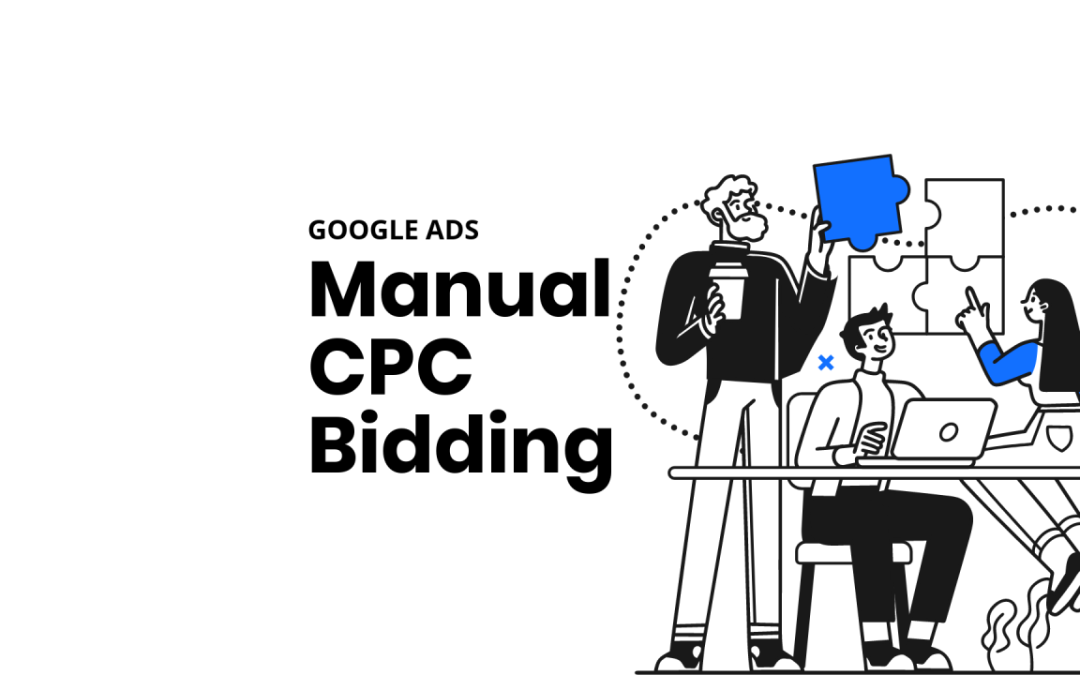
Google Ads manual CPC puts you in complete control of your click costs for advertisements. Setting up campaigns brings advertisers to a crucial choice between manual bid settings and Google’s automated system.
Google claims automated bidding works better than Manual CPC because it “takes much of the heavy lifting and guesswork out of setting bids to meet your performance goals”. The reality isn’t that straightforward. Manual CPC bidding gives you a distinct advantage that allows precise control over advertising costs. Advertisers with tight budgets below $20 per day per campaign or newcomers with limited data will find manual CPC more beneficial than smart bidding.
This piece compares both strategies objectively to help you pick the right approach for your needs. You’ll get clear guidance based on real-life performance factors instead of theoretical benefits, whether you’re choosing between manual CPC Google Ads settings or automated options like maximize clicks.
What is Manual CPC and Smart Bidding?
Picking the right bidding strategy in Google Ads requires you to know the basic differences between manual and automated approaches. Your campaign’s success depends on it.
Definition of Manual CPC
Manual Cost-Per-Click (CPC) bidding lets you take full control of your advertising campaign. You decide the maximum amount you’ll pay each time someone clicks your ad. It’s like setting a spending limit while keeping track of every dollar spent.
This 15-year old bidding method gives advertisers detailed control over their campaigns. You can set different bids for each ad group or even specific keywords and placements. This precision becomes valuable especially when you have keywords that perform better than others.
The concept behind Manual CPC is straightforward – you pay only after someone clicks your ad. The actual cost usually stays below your maximum bid because Google’s auction system charges just enough to outbid your closest competitor.
Definition of Smart Bidding
Smart Bidding showcases Google’s advanced automated bidding system that runs on sophisticated machine learning algorithms. This subset of automated bidding strategies focuses on optimizing conversions or conversion value.
Smart Bidding stands out with its “auction-time bidding” feature that adjusts your bids for every auction in live. The system looks at many signals including:
Device type
Location
Time of day
Language
Operating system
User intent and interests
Google’s Smart Bidding strategies include:
Target CPA (Cost Per Acquisition): Sets bids to get as many conversions as possible at your target cost per action
Target ROAS (Return On Ad Spend): Aims to achieve your desired return on ad spend
Maximize Conversions: Uses your budget to get the most conversions possible
Maximize Conversion Value: Focuses on getting the highest value conversions within your budget
Enhanced CPC: Adjusts manual bids based on conversion likelihood
How they differ in control and automation
The biggest difference between these strategies comes down to who makes the bidding decisions. Manual CPC puts you in charge of all bidding choices based on your analysis and strategy. Smart Bidding hands these decisions over to Google’s AI systems.
You’ll find a clear difference in control levels too. Manual CPC shows you exactly what you’re bidding and why. Smart Bidding works more like a black box – you see results but might not understand why each bid gets adjusted.
These strategies need different amounts of data. Smart Bidding runs on historical data and needs at least 30 conversions in a 30-day period to work well. Manual CPC works fine even without any conversion history.
Your campaign’s specific needs often determine the best choice. New campaigns, niche markets, or situations needing tight budget control work better with Manual CPC. Smart Bidding shines with established campaigns that have lots of conversion data, and it’s great for advertisers who want to scale efficiently.
Manual CPC vs Smart Bidding: Key Differences
Let’s explore why advertisers pick either manual CPC or Smart Bidding based on their campaign needs and maturity level.
Control and transparency
The biggest difference between manual CPC and Smart Bidding comes down to control. google ads manual cpc gives you full control over your bid adjustments. You decide exactly what to pay for each click and allocate your budget with precision. You can see what you’re paying and understand the reasoning behind each cost.
Smart Bidding works more like a black box. The system packs plenty of power but doesn’t show its work. One expert puts it this way: “You don’t always see why Google adjusts your bids, making it harder to diagnose issues or fine-tune performance”. This lack of clarity can make it tough to fix campaign problems.
Data requirements
These two approaches handle data very differently. Smart Bidding runs on lots of conversion data—you’ll need at least 30 conversions in the past 30 days to get good results. The system doesn’t work well without enough historical data to guide its decisions.
Manual CPC shines even with limited data. It works great when you:
Launch new campaigns without conversion history
Work with niche keywords or small audiences
Test new markets before growing
In fact, manual CPC works better during early campaign stages while you gather performance data.
Performance predictability
Each strategy brings its own reliability factors to the table. Manual CPC delivers steady results when market conditions stay stable. You won’t see unexpected changes unless you make them yourself. Advertisers who want reliable, predictable outcomes love this approach.
Smart Bidding can be more unpredictable, especially during learning phases. The system takes two to three weeks to stabilize after big changes to budgets or goals. Changes to campaign settings can also restart the learning process, which leads to temporary performance swings.
Manual CPC stands out as the only bidding strategy where results improve steadily as you spend more, showing a direct link between budget size and performance.
Ease of use
Time and expertise requirements vary between these approaches. Manual bidding needs constant attention and regular tweaks. Managing thousands of keywords by hand gets harder as campaigns grow, and mistakes can happen. You’ll need solid PPC knowledge and hands-on management skills.
Smart Bidding cuts down management time. The system adjusts bids automatically using live data about devices, timing, location, and user behavior. This automation helps a lot, especially with big accounts running multiple campaigns.
The system isn’t completely hands-off though. You still need proper setup, accurate conversion tracking, and regular checks to match business goals. Manual CPC gets more time-consuming as campaigns grow, while Smart Bidding handles scale better.
Your choice depends on your situation, resources, and goals. Many advertisers use both strategies – manual CPC where they want tight control and Smart Bidding where automation makes more sense.
When to Use Manual CPC in Google Ads
Smart Bidding automates a lot, but google ads manual cpc works better in several specific cases. You should know these situations to make better decisions about controlling your bids directly.
New campaigns with no conversion data
Manual CPC bids are a great way to get started with fresh campaigns that lack performance history. Smart Bidding needs at least 30 conversions in a 30-day period to work. Many experts suggest you should wait for 45-60 conversions before switching to automation. Automated systems just make educated guesses without this data, which leads to wasted spending.
A manual approach lets you do these things early on:
Collect data right away instead of waiting for the system to “learn”
Adjust bids quickly based on what you see working
Build up enough performance data to switch to Smart Bidding later
Tight budget control
Manual CPC gives you the best control when you have limited funds. Automated bidding can eat through budgets faster while chasing conversions. Setting your maximum cost-per-click manually puts a hard stop on spending.
This works really well for campaigns with daily budgets under $20. You can keep your ads showing up all month instead of running out of money too soon. It also lets you put more money into keywords that you know perform well, which helps you get the most from your budget.
Brand and competitor targeting
Brand campaigns and competitive keyword targeting do better with Manual CPC. Your branded searches convert better anyway, so you just need steady visibility at good prices.
Manual bidding on brand terms can cut your CPCs by 30-70% while maintaining results. This happens because people searching for your brand already want to buy, so smart bidding’s optimization doesn’t add much value.
Low-volume or niche keywords
Niche markets and specialized keywords with low search volume present the strongest case for manual CPC. Automated systems struggle when they don’t have enough data to make good decisions.
Your business knowledge often beats what algorithms can figure out in these cases. Research shows that campaigns for specialized products or services get better results with manual CPC than automated bidding that’s trying to work with limited data.
Small B2B markets or very specific products need human insight. You understand these keyword values better than any automation working with just a few data points.
When Smart Bidding Makes More Sense
Manual CPC provides precision in specific scenarios, but Smart Bidding excels when its AI-powered approach can deliver better results. Advertisers need to know these scenarios to decide between automation and hands-on control.
Campaigns with strong conversion history
Smart Bidding needs enough data to work. Google recommends having at least 30 conversions in the past 30 days. Target ROAS works best with at least 50 conversions during that time. The algorithms can’t make good bidding decisions without this baseline data.
Your campaign can substantially outperform manual cpc approaches once it builds this conversion foundation. Some experts suggest thinking about Smart Bidding with just 5-10 conversions per month, though official guidelines recommend waiting longer to get the best results.
Large-scale accounts
Smart Bidding becomes more valuable as accounts get complex. Automation helps maintain consistency and performance without constant monitoring for advertisers who manage multiple campaigns or large accounts. This makes google ads manual cpc less practical as operations grow larger.
Large accounts benefit greatly from time savings. Smart Bidding handles thousands of keyword bid adjustments automatically based on performance patterns, which would be impractical to do manually.
Dynamic market conditions
Smart Bidding adapts to changing conditions better than manual approaches in ever-changing markets. The system adjusts daily and responds to seasonal changes, user behavior, and competition faster than human-managed bids.
Smart Bidding also responds to up-to-the-minute changes in competition, device type, or location during each auction. Black Friday or Christmas sales work well with this system because market conditions change quickly.
Multiple conversion goals
Smart Bidding offers advanced optimization capabilities for advertisers who need to balance various conversion objectives. The system handles complex scenarios such as:
Optimizing for different attribution models, including evidence-based attribution
Setting device-specific performance targets for mobile, desktop, and tablet
Balancing conversion volume with conversion value
Moving from Maximize Conversions to Maximize Conversion Value makes sense if you track different-valued conversions. Advertisers who switch from target CPA to target ROAS typically see 14% more conversion value at similar return rates.
Smart Bidding needs proper setup—good conversion tracking, realistic targets, and patience through learning periods that last 1-2 conversion cycles. This system becomes a powerful tool that often outperforms google ads manual cpc vs maximize clicks when campaigns have consistent conversion data and these foundations in place.
Pros and Cons of Each Strategy
The choice between bidding strategies ended up being about knowing their strengths and limitations. Let’s get into what each approach brings to the table and where it might fall short.
Manual CPC: Pros and Cons
Pros:
Complete control over bids – You set exact amounts to pay for each click, which leads to strategic bidding
Flexibility and precision – Your ROI improves as you tweak bids based on performance data
Better budget management – Your funds work harder by focusing on keywords that perform well
Works without history – The system runs smoothly even without conversion data
Cons:
Time-consuming – You must keep an eye on it and make regular tweaks
Requires expertise – You should know your market and what drives performance
Less automation – You might miss clicks that automated systems could catch
Scaling difficulties – Large accounts with thousands of keywords become hard to handle
Smart Bidding: Pros and Cons
Pros:
Time efficiency – Automation saves hours you’d spend on manual adjustments
Immediate optimization – The system makes auction-time bids using signals advertisers can’t see
Scales efficiently – Large accounts stay on track without constant attention
Reduced transparency – The system works like a “black box” with limited insight into decisions
Learning period volatility – Results bounce around for 7-14 days after changes
Data dependency – Success depends on solid conversion tracking and enough history
Less control – Sometimes the AI misreads business context and what audiences want
Comparison table: Manual CPC vs Maximize Clicks
Feature
Manual CPC
Maximize Clicks
Control
Full control over bids
Budget control and optional max CPC cap only
Optimization Goal
Your choice of metrics
Maximum clicks within your budget
Time Investment
High with regular tweaks needed
Low thanks to automation
Best Use Case
New campaigns, tight budget control
Getting traffic when conversion data is limited
Risk Level
Lower spending risk but might miss opportunities
Budget spends faster on less valuable clicks
Conclusion
Your campaign needs and circumstances will determine the choice between manual CPC and Smart Bidding. Manual CPC works best when you need detailed control, have limited data, or must stick to strict budgets. Smart Bidding excels in campaigns that have a strong conversion history and advertisers who want to scale.
Top advertisers use both strategies in their different campaigns. Manual CPC proves effective for branded keywords and niche products. Smart Bidding takes care of campaigns with enough conversion data. This combined approach gives you precise control and automation exactly where you need them.
Both strategies have their limitations. Manual bidding takes more time but gives you clear insights and predictable results. Smart Bidding saves time but might not show you how it makes decisions.
Take an honest look at your campaign’s maturity, data availability, and management resources before deciding. New advertisers should start with manual CPC until they build enough performance history. Smart Bidding becomes a good option once your campaigns show steady conversions because it can optimize at scale.
The choice of bidding strategy isn’t about picking a winner. These approaches work as complementary tools in your advertising toolkit. Your campaigns can benefit from both methods as they grow and your business goals change.
FAQs
Q1. What’s the main difference between Manual CPC and Smart Bidding in Google Ads? Manual CPC gives advertisers full control over bid amounts, while Smart Bidding uses machine learning to automatically optimize bids for conversions or conversion value.
Q2. When should I use Manual CPC bidding? Manual CPC is best for new campaigns without conversion data, situations requiring tight budget control, brand and competitor targeting, and campaigns with low-volume or niche keywords.
Q3. In what scenarios does Smart Bidding perform better? Smart Bidding excels for campaigns with strong conversion history, large-scale accounts, dynamic market conditions, and when managing multiple conversion goals.
Q4. How much conversion data is needed for Smart Bidding to be effective? Generally, Smart Bidding requires at least 30 conversions in the past 30 days to function effectively. Some strategies, like Target ROAS, perform best with at least 50 conversions in that timeframe.
Q5. Can I use both Manual CPC and Smart Bidding strategies in my Google Ads account? Yes, many successful advertisers use both strategies across different campaigns. For example, you might use Manual CPC for branded keywords and niche products, while applying Smart Bidding to campaigns with sufficient conversion data.
YouTube Shorts generates over 200 billion views per day — nearly tripling the 70 billion daily views reported in early 2024. The platform reaches 2 billion monthly logged-in users, more than TikTok (1.59 billion) and Instagram Reels (1.8 billion). Short-form content now accounts for 22% of YouTube’s total ad revenue, up from 15% the year before. 62% of brands allocate more budget to Shorts than to TikTok or Instagram Reels.
For advertisers, Shorts ads deliver lower costs, higher engagement, and reach that traditional video ads can’t match at the same budget. But the full picture is more nuanced than “Shorts are better.” The formats serve different roles in the funnel, require different creative approaches, and measure success by different definitions. The brands winning with Shorts in 2026 aren’t replacing their long-form strategy — they’re combining both.
This guide covers the specific performance data that makes Shorts ads effective, how they compare to other YouTube and social formats, the creative and technical requirements for the format, how to set up campaigns in Google Ads, and the combined Shorts + long-form strategy that top-performing advertisers use.
The Performance Case: What the Data Shows
Engagement and Reach
YouTube Shorts leads all short-form platforms in engagement rate at 5.91%, ahead of TikTok (5.75%) and Instagram Reels (5.53%). That gap looks small in percentage terms, but at the scale these platforms operate — billions of daily views — even fractional engagement advantages compound into meaningful performance differences.
Shorts reach nearly 50% more viewers than standard YouTube videos at comparable budget levels. 74% of Shorts views come from non-subscribers, making it YouTube’s primary discovery format — viewers encounter brands they’ve never interacted with before.
YouTube ads overall have 2x higher ad recall than other social media video ads (Google/Kantar 2026). And 84% of consumers report being convinced to buy a product after watching a brand video on YouTube (Google/Ipsos 2026).
Purchase Intent and Conversion Signals
Google-commissioned Kantar research on 20 brand campaigns found that Creator Ads on Shorts boost purchase intent by 8.8% on average and drive 2.9x higher consumer spending intent compared to competing platforms.
The critical context: these figures are specifically for Creator Ads — influencer partnership content where a creator produces the ad natively for the Shorts format. Brand-produced Shorts ads still outperform many traditional formats, but the creator partnership layer adds authenticity that further lifts intent metrics. Advertisers expecting 8.8% purchase intent lift from standard brand-produced Shorts creative may be miscalibrating their benchmarks.
Cost Efficiency
Shorts ads deliver significantly lower costs than other YouTube formats:
Shorts CPM: $3-8 (cost per 1,000 impressions)
Non-skippable in-stream CPM: $8-15
Standard in-stream CPM: $5-10 (varies heavily by targeting)
Shorts CPV: $0.10-$0.30 (cost per view)
Shorts CTR: 0.3-0.8%
Video View Campaigns that include Shorts placements deliver up to 56% cost savings compared to traditional TrueView ad campaigns (Strike Social 2024-2025 data). A $50 budget can generate approximately 7,000 Shorts views.
The efficiency comes from the format itself: shorter creative, lower production costs, and a rapidly growing inventory pool where advertiser competition hasn’t yet caught up to viewership growth.
How Shorts Ads Actually Work (Mechanically)
Shorts ads run between organic Shorts in the vertical feed. They’re non-skippable (users can scroll past but can’t skip within the ad), run up to 60 seconds, and require 9:16 vertical creative to appear native rather than letterboxed.
The view definition matters: On Shorts, a view counts after 10 seconds of watching (or the full duration if shorter). Standard YouTube in-stream ads count a view at 30 seconds. This means view rates and CPV between Shorts and in-stream are not directly comparable. A 40% “view rate” on Shorts and a 32% “view rate” on in-stream represent fundamentally different viewer commitments.
Shorts ads are bought through standard Google Ads campaigns:
Video Action Campaigns: Best for driving conversions and website traffic. Supports Shorts placements with strong CTAs.
Demand Gen Campaigns: Google’s newer format that runs across YouTube Shorts, YouTube Feed, Discover, and Gmail. Recommended for consideration-to-conversion campaigns in 2026.
Video View Campaigns: Optimized for views and reach. Includes Shorts in the placement mix.
Performance Max: Includes YouTube inventory (including Shorts) when video assets are provided. PMax campaigns with YouTube perform 18% better than campaigns without video.
To target Shorts-only placement: in campaign settings, under Devices, select only “Mobile phones.” This ensures your 9:16 creative runs in the Shorts feed rather than being displayed in the standard 16:9 player.
What’s New in Shorts Ads for 2026
Comments on Ads
YouTube added comments to eligible Shorts ads, eliminating the gap between sponsored and organic content. Viewers interact with the ad the same way they would with an organic Short. Brands join conversations that feel genuine rather than promotional. Requires connecting your YouTube channel to your Google Ads or DV360 account. Comment moderation uses existing YouTube Studio controls.
Clickable Links in Creator Content
Shorts creators working with brands can add direct links to brand websites in their sponsored content. This creates an uninterrupted path from discovery to action and lets marketers track how Shorts partnerships drive website traffic and sales — moving beyond views and likes to conversion measurement.
Expanded Placements
Shorts ads have expanded beyond the mobile app to include mobile web browsers (capturing users who browse YouTube on their phone’s browser), desktop, and Connected TV. YouTube reports that CTV Shorts viewership doubled in 2024, and YouTube was the #1 streaming platform on TV screens in the U.S. in 2025 — accounting for 12.5% of all TV viewing in May 2025.
YouTube Shopping Integration
YouTube Shopping is growing 25% per quarter. Product links in Shorts and videos are becoming mainstream. Shoppable Shorts ads allow viewers to browse and purchase products without leaving the platform. This closes the gap between discovery and transaction that traditionally required multiple clicks across different properties.
Creative Best Practices: The 2-Second Rule
The viewer mindset in the Shorts feed is fundamentally different from standard YouTube. Shorts viewers are in rapid-consumption, swipe-or-stay mode. They make watching decisions in under 2 seconds — compared to 5 seconds for standard in-stream ads.
This means creative that opens with a slow introduction, a title card, or a brand logo will be mentally dismissed immediately, even though it technically can’t be skipped.
The Non-Negotiables
Vertical-first (9:16). Horizontal video letterboxed into a vertical frame performs dramatically worse. Design for vertical from the start. Minimum resolution: 1080x1920px.
Hook in the first 1-2 seconds. Start with motion, a surprising visual, a problem statement, or a direct question. Not your logo. Not a fade-in. The first frame needs to earn the viewer’s attention immediately.
15-30 seconds is the sweet spot for ads. YouTube Shorts can run up to 3 minutes, but the most effective ad creative runs 15-35 seconds. Shorter = higher completion rates = lower costs. Videos using music from YouTube’s catalog are limited to 15 seconds.
Sound on. Adding music, voiceover, or both boosts conversions by over 20%. Music hooks viewers in the first seconds and maintains attention throughout. Choose trending audio when possible — Shorts exist in a trend-driven context where familiar sounds signal relevance.
Text overlays. 69% of viewers watch in public without audio. Text reinforces your message for silent viewers, highlights key product features, and strengthens CTAs. Keep text short, use large bold fonts readable on small screens.
UGC-style outperforms polished production. Shorts rewards authenticity, humor, and relatability over production polish. Creator-produced content and UGC-style brand creative consistently outperform studio-produced alternatives. Ads using creator videos generate 20% higher conversions on the Shorts feed compared to standard brand ads. YouTube BrandConnect helps find relevant creators based on your audience’s search behavior.
Trend velocity. Shorts exist in hyperlocal trend contexts — trending audio, challenges, formats, and memes evolve daily. Brands capable of producing content at high velocity capitalize on trend moments through cultural relevance. This is a meaningful creative advantage over traditional video production timelines.
Shorts vs. Regular Video Ads: When to Use Each
The question isn’t which is better. It’s which to use at each stage of the funnel.
Shorts ads excel at:
Top-of-funnel awareness and discovery (74% of views from non-subscribers)
Cost-efficient reach at scale ($3-8 CPM vs $8-15 for non-skippable)
Mobile-first and Gen Z audience targeting
Rapid creative testing (lower production cost per asset)
Brand discovery and initial consideration
Standard YouTube ads (in-stream, bumper, non-skippable) excel at:
CTV/big-screen viewing (sitting-back, less distracted context; 90-96% completion rates)
Complex product storytelling (skippable in-stream at 30-60 seconds)
Retargeting and sequential messaging
The combined strategy. Channels using both Shorts and long-form content grow 41% faster than channels using one format alone. The advertising equivalent: Shorts ads drive discovery and initial brand awareness. In-stream or Demand Gen ads retarget Shorts viewers with deeper messaging. Conversion happens downstream.
A practical campaign structure: run a Video View Campaign (Shorts-heavy) for top-of-funnel awareness, then retarget engaged viewers with a Video Action Campaign or Demand Gen campaign using longer-form creative with stronger CTAs.
Maximizing ROI: Setup and Measurement
Campaign Setup
In Google Ads, create a new campaign. Select your objective (awareness → Video Views; consideration → Demand Gen; conversion → Video Action Campaign).
Upload vertical 9:16 creative assets.
Under Devices, select “Mobile phones” only if you want Shorts-only placement.
Set bidding strategy to match your objective: Maximize Views or CPV for awareness, Max Conversions or Target CPA for conversion-focused campaigns, Target ROAS for revenue optimization.
Start with a modest budget ($50-100/day minimum for meaningful data). Increase by 15-30% every 3-4 days if KPIs hold.
Measurement Beyond Views
Views are a starting metric, not a success metric. Track:
Engaged-view conversions: Viewers who watch at least 10 seconds without clicking and convert within the conversion window. This captures the awareness-to-purchase pipeline.
View-through conversions: Users who see your ad impression and convert later without clicking. Essential for understanding Shorts’ brand impact on downstream conversion.
Click-through rate and conversion rate: Direct response metrics for Demand Gen and Video Action campaigns.
Brand lift studies: Google offers brand lift measurement for campaigns above minimum spend thresholds. Measures ad recall, brand awareness, consideration, and purchase intent.
Cost per conversion: The metric that connects spend to business outcomes.
Budget Benchmarks
Shorts CPV: $0.10-$0.30 per view
Shorts CPM: $3-8 per 1,000 impressions
A $50 daily budget: Approximately 7,000 views
Break-even calculation: If your product margin is $50 and your Shorts-to-conversion rate (through the full funnel) is 0.5%, you need 200 views to generate one conversion at $0.25 CPV = $50 ad spend per conversion. Adjust these numbers for your specific economics.
Platform Comparison: Shorts vs TikTok vs Reels
For advertisers deciding where to allocate short-form video budget:
YouTube Shorts: 2B monthly users. 200B+ daily views. 5.91% engagement rate. $3-8 CPM. YouTube’s search and discovery infrastructure drives longer viewing sessions. 2x higher ad recall than other social video ads. #1 platform for brand and product discovery in short-form. Strongest CTV/big-screen presence.
TikTok: 1.59B monthly users. 5.75% engagement rate. Strong trend-driven creative culture. Younger skewing audience. Regulatory uncertainty in some markets. Higher CPMs in competitive categories.
Instagram Reels: 1.8B monthly users. 5.53% engagement rate. Integrated with Instagram’s shopping and DM infrastructure. Strong for lifestyle and fashion verticals. Lower standalone discovery compared to Shorts and TikTok.
62% of brands now invest more in Shorts than TikTok or Reels. The combination of YouTube’s search indexing (Shorts appear in Google search results), CTV distribution, and Google Ads integration gives Shorts structural advantages that compound as short-form advertising matures.
Maximize Conversion Value is one of Google Ads’ four Smart Bidding strategies, and it’s the one most misunderstood by advertisers who’ve only ever optimized for conversion count.
The premise: instead of telling Google to chase volume, tell it to chase value. The algorithm bids higher on clicks likely to produce $500 sales and lower on clicks likely to produce $15 ones. Your budget stays the same, but the revenue coming out of it goes up.
That premise is real. Campaigns switching to Maximize Conversion Value regularly see 20-35% ROAS improvements without meaningful increases in spend. For lead generation accounts using Enhanced Conversions for Leads to feed pipeline data back to Google, the results are even more pronounced — multiple studies report MCV outperforming Maximize Conversions by nearly 300% on ROAS.
But the strategy has sharp edges. Budget-pacing quirks, scaling limitations, and a set of prerequisites that, if you skip them, make the algorithm work against you. This guide covers how the bidding mechanism actually works, when MCV is the right call vs. when it isn’t, how to set it up without the usual mistakes, the lead gen infrastructure that most accounts are missing, and when to graduate to Target ROAS.
A naming note for June 2026: Google is relabeling “Maximize Conversion Value with a Target ROAS” as simply “Target ROAS,” and “Maximize Conversions with a Target CPA” as “Target CPA.” The underlying bidding behavior is unchanged. If you see different labels in your account during this transition, the strategies described in this guide still apply exactly as written.
How the Bidding Mechanism Actually Works
Maximize Conversion Value is an automated, auction-time bidding strategy. For every auction your ads enter, the algorithm evaluates contextual signals — device, location, time of day, search query, user demographics, browser, OS, audience lists, past behavior patterns — and predicts the expected conversion value of that click. It then sets a bid designed to maximize total conversion value across your daily budget.
Two things about that mechanism matter more than everything else:
Its primary objective is spending your budget. Value maximization is secondary. If you set a $200/day budget, the algorithm will try to spend $200. It can spend up to 2x your daily budget on any given day (though it balances over the month). This budget-first behavior has major implications for performance across demand fluctuations.
It needs meaningful value differentiation to work. If all your conversions carry the same value (or you haven’t set up value tracking at all), Maximize Conversion Value has no signal to differentiate between a high-value click and a low-value click. It effectively becomes Maximize Conversions with extra steps. The strategy only earns its keep when there’s genuine variance in your conversion values — different product prices, different lead qualities, different subscription tiers.
The Signals It Uses
The algorithm processes dozens of auction-time signals. The ones with the most practical impact: search query and intent (a “buy” query signals higher purchase intent than an informational one), device (mobile vs. desktop conversion rates and AOVs often differ substantially), geographic location (some regions produce higher-value transactions), time of day and day of week, audience membership (remarketing lists, customer match), and the user’s cross-platform browsing and purchase history.
You don’t manually adjust for these. The algorithm handles that. But you need to understand that the algorithm is only as good as the value data you feed it.
How It Differs from Maximize Conversions
Maximize Conversions tells Google: get me as many conversions as possible within my budget. A $15 sale and a $1,500 sale count the same. The algorithm optimizes for volume.
Maximize Conversion Value tells Google: get me the highest total conversion value within my budget. A $1,500 sale is worth 100x more than a $15 sale. The algorithm bids more aggressively on clicks predicted to produce higher-value outcomes, even if that means fewer total conversions.
The practical result: fewer conversions but higher revenue, higher ROAS, and — in many cases — lower CPA on the conversions that actually matter.
When Maximize Conversions Is Still the Better Call
All your conversions carry roughly equal value (uniform pricing, single product). You’re in early-stage data collection and need volume to build conversion history. You’re running awareness or trial offers where volume matters more than per-unit value. You haven’t set up conversion value tracking yet.
If every conversion is worth the same to your business, there’s no value signal for the algorithm to optimize around. Use Maximize Conversions in that scenario.
Context: ECPC deprecation. Enhanced CPC was deprecated for Search and Display campaigns in March 2025. Advertisers previously using ECPC have been moved to Manual CPC and need to transition to Smart Bidding strategies. For accounts with sufficient conversion volume and value data, MCV is the natural next step from what ECPC was doing — optimizing bids toward better outcomes — but with far more algorithmic capability.
The Budget-Pacing Problem
This is the operational reality that matters most for day-to-day account management, and most guides skip it entirely.
Because MCV’s primary goal is spending your budget, it creates a structural problem across demand fluctuations:
On low-demand days (fewer searches for your products), the algorithm still tries to spend your full budget. The only lever it has is to increase CPCs — paying more for the same clicks, or entering auctions it would normally skip. Your ROAS drops because you’re paying more per click while conversion rates stay constant.
On high-demand days (spikes in search volume), your budget acts as a ceiling. The algorithm may actually lower bids to stretch the budget across the full day, which means you’re leaving profitable clicks on the table. ROAS might look good, but you’re capping total revenue.
This is the fundamental scaling limitation of Maximize Conversion Value without a Target ROAS constraint. It can’t flex up to capture profitable demand above your daily budget, and it inflates costs to hit budget on slow days.
What this means in practice: If your MCV campaign’s CPCs creep up on certain days without a corresponding increase in conversion value, the algorithm is likely forcing spend during low-demand periods. If your best-performing days always hit budget early, you’re leaving money on the table. And MCV campaigns tend to “save budget” during early hours and spend more aggressively during predicted high-value windows (often late morning through evening for ecommerce) — if you check performance at 8 AM and panic because spend looks low, wait until end of day.
When Maximize Conversion Value Is the Right Strategy
It’s right for you if:
You sell products or services at meaningfully different price points (ecommerce with $50-$2,000 range, SaaS tracking both free trial signups and paid subscriptions, service businesses where different inquiry types carry different contract values).
You’re in a growth phase and want to maximize total revenue within a fixed budget. “We have $15K/month, make it produce as much revenue as possible” — MCV is the direct answer to that brief.
You have enough conversion volume. Google’s stated minimum: 30 conversions in the past 30 days. For Demand Gen campaigns: either 50 conversions with value in 35 days (including 10 in the last 7 days), or 100 conversions with value across all Demand Gen campaigns in 35 days. In practice, 50-60+ conversions per month produces faster stabilization.
You’re not yet ready for Target ROAS. MCV is an excellent stepping stone that collects the value data Google needs to build the prediction models that make tROAS effective later.
It’s wrong for you if:
You need to scale beyond your current budget (MCV is budget-bound — use tROAS to unlock demand-responsive spending). Your conversions all carry the same value (no value signal — use Maximize Conversions). You have strict profitability requirements (MCV without tROAS doesn’t guarantee any particular ROAS — add a target or use tROAS from the start). Your conversion tracking isn’t set up properly (the algorithm will optimize toward whatever values it sees, even if they’re wrong).
Compatible campaign types: Search, Display, Video Action, Performance Max, and Demand Gen. Not compatible with Shopping campaigns — use Target ROAS or manual bidding for those. Performance Max pairs well because PMax already optimizes across all Google surfaces. Adding value-based bidding on top of cross-channel optimization gives the algorithm maximum flexibility. PMax campaigns that include YouTube perform 18% better than campaigns without a video component.
Setting It Up: Ecommerce
Step 1: Get Dynamic Transaction Values Right
Your conversion tracking must pass the actual transaction value for each purchase. If you’re using Google’s global site tag or GTM, the purchase event needs to include the value parameter with the real order total. Without transaction-specific values, the algorithm can’t distinguish a $30 order from a $300 order.
Conversions with Cart Data: For ecommerce accounts, this feature passes product-level data (not just the order total) to Google. The algorithm can learn which product categories, price points, and product combinations drive the most value — enabling it to optimize at a more granular level than order-total-only tracking. Enable this through your Merchant Center feed integration.
Feed profit data, not just revenue. If your conversion values reflect revenue, the algorithm treats a $100 order with 20% margin the same as a $100 order with 60% margin. Those are worth $20 and $60 in profit — a 3x difference. Pass margin-adjusted values instead of raw revenue. Use COGS data through Merchant Center or index your values proportionally (set your lowest-margin products at 1.0 and scale everything relative to that). The algorithm doesn’t need your actual dollar margins; it needs the relative relationships between products to be accurate.
Step 2: Audit Conversion Actions
Before switching bid strategy, check what’s counted as a conversion. Micro-conversion pollution — page views, add-to-carts, scroll events, or time-on-site set as primary conversion actions — is one of the most common causes of MCV underperformance. These events are cheap and abundant, making them attractive targets for a system trying to maximize value. Move everything that doesn’t directly tie to revenue or qualified leads to “secondary” conversion actions.
Step 3: Switch and Wait
Change the bid strategy to Maximize Conversion Value. Do not set a Target ROAS initially — let the algorithm run unconstrained to collect data. Set your daily budget to an amount you’re genuinely comfortable spending every day (the algorithm will try to spend it). The learning phase typically takes 2-4 weeks. Do not make significant changes during this period. Give the system 30-90 days before evaluating.
Setting It Up: Lead Generation
Lead gen is where MCV delivers its biggest upside — but also where the setup is most commonly wrong. The core problem: the keyword producing the most form fills is rarely the keyword producing the most pipeline. Without the right tracking infrastructure, you’ll scale the wrong keywords.
Enhanced Conversions for Leads: The Infrastructure That Makes MCV Work for Lead Gen
Enhanced Conversions for Leads (ECL) is the technical mechanism that connects your online ad clicks to your offline sales outcomes. It passes hashed first-party data (typically the email address from your lead form) back to Google, which matches it against signed-in users who clicked your ad. When you later import CRM conversion events (MQL, SQL, Closed-Won) with their associated values, Google can attribute those downstream outcomes back to the original click.
This is what lets the algorithm optimize toward actual pipeline and revenue — not just form submissions.
Why ECL matters for MCV specifically: Without ECL, your MCV conversion values are either (a) static proxies you’ve assigned to each form type (e.g., “phone call = $300, form fill = $200”), or (b) not differentiated at all. With ECL, you can pass back the actual dollar value of each lead as it progresses through your CRM — $5,000 deal closed, $0 deal lost. The algorithm learns which keywords, audiences, devices, and times produce the leads that become revenue, not just the leads that become leads.
The implementation path: Capture the email from your lead form using the Google tag or GTM. ECL hashes it automatically. When the lead progresses in your CRM (Salesforce, HubSpot, Pipedrive, or any system), upload the conversion event with its value through Google Ads Data Manager, a direct CRM integration (Salesforce and HubSpot have native connectors), or Zapier.
Critical deadline: June 15, 2026. The legacy UploadClickConversions API endpoint is being deprecated. Offline conversion uploads must migrate to the Data Manager API. If your custom integration hasn’t sent a request between January and June 2026, it won’t be allowlisted for legacy access. If you built your offline conversion pipeline before 2024 and haven’t touched it, audit which path you’re on this week.
The April 2026 unification: Starting April 2026, enhanced conversions for web and leads are combined into a single on/off setting. Google Ads will simultaneously accept user-provided data from website tags, Data Manager, and API connections. You no longer need to choose between implementation methods. Existing setups are automatically migrated.
The Value Formula for Lead Gen
If you’re not yet importing CRM data, use this formula to assign proxy values:
Conversion Value = Average Deal Size x Profit Margin x Close Rate x Stage Probability
For a B2B SaaS company: average deal closes at $5,000, 40% margin, 15% of leads become customers. Value = $5,000 x 0.40 x 0.15 = $300 per lead.
If you have multiple conversion actions (form fill, phone call, chat request) with different close rates, assign different values. A phone call converting at 25% should carry a higher value than a form fill converting at 10%.
When you add stage probability: if you’re optimizing toward SQLs rather than raw leads, and 40% of SQLs close, your value formula adjusts: $5,000 x 0.40 x 0.40 = $800 per SQL. But remember to recalculate your Target CPA expectations accordingly — optimizing toward a less frequent conversion event at a higher value means your allowable CPA goes up proportionally.
Upload Frequency
Upload conversions at least daily. If you can’t upload daily, establish a consistent regular schedule (every 2 days, or weekly). Smart Bidding responds best to consistent, frequent uploads. Run at least 1-2 full conversion cycles of consistent daily uploads before including the conversion action in the “Conversions” column for bidding.
Optimizing Performance After Launch
Conversion Value Rules
Value rules adjust conversion values based on audience, location, or device conditions without changing your underlying tracking. If California leads are worth 2x your average, create a value rule that multiplies conversion value by 2 for California users. If your remarketing audience converts at higher deal sizes, apply a multiplier there. These rules give the algorithm real-time signals about which customer segments to prioritize.
Portfolio Bid Strategies
Instead of running MCV on individual campaigns, a portfolio strategy spanning multiple campaigns gives the algorithm a larger data pool and budget flexibility — it can shift spend between campaigns based on where the highest-value opportunities are at any moment. The typical performance lift from consolidating into portfolio strategies: 15-25% improvement in overall account ROAS.
New Customer Acquisition Goals
Google Ads lets you set a higher value for first-time buyers. The algorithm bids more aggressively for users matching new-customer signals while maintaining lower bids for existing customers. Essential for DTC and subscription businesses where LTV from a new customer far exceeds first-purchase value.
Seasonality Adjustments
For known demand spikes (Black Friday, back-to-school, seasonal peaks), use Google’s seasonality bid adjustments. These tell the algorithm to expect a temporary change in conversion rates during a specific window. Without this, the algorithm may underreact to a genuine demand surge because its models are based on recent history that doesn’t include the seasonal spike.
Set the adjustment 1-2 days before the expected change. Remove it when the period ends. Use estimated conversion rate increases (e.g., +30% conversion rate during Black Friday weekend) based on your prior year data.
Data Exclusions
When tracking breaks — a tag fires incorrectly for 3 days, a currency conversion error corrupts value data, a duplicate event inflates conversions — use Google’s data exclusion feature to remove that period from the algorithm’s learning data. Without this, the algorithm trains on corrupted data and makes suboptimal bidding decisions for weeks afterward.
Exploration Mode
When you add a Target ROAS to MCV (or use the standalone Target ROAS strategy), Google offers an exploration feature that lets the algorithm test traffic outside your target efficiency while maintaining overall performance. You set tROAS at 400%. The algorithm maintains that target on roughly 80% of budget but explores new audiences and placements with the remaining 20%, accepting temporary ROAS as low as 300% to identify high-potential opportunities that wouldn’t have been discovered under strict efficiency constraints.
Performance Max Specifics
MCV in PMax campaigns behaves differently than in Search. PMax optimizes across all Google surfaces simultaneously — Search, Display, YouTube, Gmail, Maps, Discover. The algorithm has more flexibility but less transparency. Key considerations: Asset Group quality ratings (Low/Good/Best) function as PMax’s equivalent of Quality Score — a “Low” rating limits reach. Search Themes guide PMax’s Search inventory targeting. Make sure your value data is accurate before running MCV on PMax, because the cross-channel optimization amplifies any tracking errors.
Graduating to Target ROAS
MCV without a Target ROAS is a growth-phase strategy. For most accounts, it’s a stepping stone to tROAS, which adds an efficiency constraint that unlocks scaling potential.
Data-Backed Transition Benchmarks
Based on Adalysis’s analysis of 16,825 Search campaigns:
Under $4,000/month campaign revenue: MCV is the primary strategy. Insufficient data for tROAS.
$4,000-$9,000/month and 25-50 conversions: Transition zone. Start testing tROAS.
$9,000+/month and 73+ conversions: Majority of advertisers at this level are already on tROAS. If you’re still on unconstrained MCV, you’re likely leaving efficiency on the table.
$24,500+/month and 91+ conversions: You should almost certainly be on tROAS.
How to Make the Switch
Look at your actual ROAS over the last 30-60 days on MCV. Set initial Target ROAS at or slightly below that actual number — if actual ROAS is 450%, start with 400-420%. Starting too high chokes volume immediately. Adjust gradually in 10-20% increments over 2-week intervals. Ensure your daily budget is at least 2-3x your average CPA — tROAS needs budget headroom.
Why tROAS Scales Better
The key difference: Target ROAS is demand-responsive. On high-demand days, it can spend above your typical daily spend because there are more profitable clicks available. On low-demand days, it naturally spends less because it won’t inflate CPCs to hit a budget target. Your daily spend fluctuates, but profitability stays consistent.
For ecommerce businesses focused on growth, this is almost always the better long-term strategy. MCV gets you from zero to stable performance. tROAS gets you from stable performance to scale.
Troubleshooting
Performance dropped after switching to MCV. Check conversion actions first. Are micro-conversions included as primary actions? Verify that conversion values are firing correctly — a tracking change, currency issue, or duplicate event can corrupt value data overnight.
CPCs spiked but conversion value didn’t increase. Budget-pacing issue. The algorithm is inflating CPCs to spend budget during low-demand periods. Reduce daily budget to match actual demand, or switch to tROAS to remove the budget-spend pressure.
The algorithm ignores high-value products. Verify that your tracking code actually passes transaction amounts. Check conversion tracking settings to confirm “Use different values for each conversion” is selected and that recent conversions show varied values.
Performance volatile after 4+ weeks. If you don’t have at least 30 conversions in 30 days, the algorithm lacks sufficient data. Increase budget to generate more volume, or switch back to Maximize Conversions to build your data foundation first.
ROAS lower than manual bidding. Give it 30-90 full days before concluding MCV is worse. If performance is still clearly worse after 60-90 days with sufficient volume, the issue is usually bad conversion data, micro-conversion pollution, or a mismatch between the strategy and your account’s conversion patterns.
Lead gen: lots of conversions but no pipeline. This is the signal that you need Enhanced Conversions for Leads. The algorithm is optimizing toward cheap, abundant form fills because that’s the only data it has. Feed it downstream CRM data with actual deal values, and the optimization shifts toward the keywords and audiences that produce revenue.
The Trajectory
For most accounts, the path is: Maximize Conversions (build volume) → Maximize Conversion Value (build value data) → Target ROAS (scale with efficiency). Each stage builds the data foundation the next stage needs.
The highest-leverage thing you can do to make any value-based strategy work better: make sure your conversion values reflect actual business value — meaning profit, not just revenue. For lead gen, that means connecting your CRM to Google through Enhanced Conversions for Leads. For ecommerce, that means passing margin-adjusted values and enabling Conversions with Cart Data.
If you fix nothing else in your account, fix the data the algorithm learns from. Everything downstream improves.
The agency vs. in-house question gets treated like a philosophical debate. It shouldn’t be. It’s a math problem layered on top of an operational capacity assessment, and the right answer depends almost entirely on your ad spend level, your growth stage, and what kind of expertise you actually need.
Most articles on this topic list generic pros and cons. Agencies have more experience. In-house teams know the brand better. Both true. Neither helpful for making a real decision.
This guide gives you the specific numbers, thresholds, and decision framework to figure out which model — agency, in-house, or hybrid — makes the most financial sense for your business right now. Not in theory. In your actual situation.
The Real Cost of an In-House SEM Hire
Most business owners underestimate in-house costs because they think in salaries, not in fully loaded expense.
A mid-level SEM specialist in the US earns $55,000–$75,000 in base salary. A senior PPC manager runs $80,000–$120,000. But base salary is only 65–75% of the actual cost. When you add benefits, payroll taxes, equipment, office space, tool subscriptions, training, and management overhead, the fully loaded cost is 1.3–1.5x the base salary.
A $90,000 hire actually costs your business $117,000–$135,000 per year.
And that’s one person. One person who needs to handle campaign strategy, keyword research, ad copywriting, bid management, conversion tracking, landing page optimization, reporting, and staying current with platform changes. If you also need SEO, content, and analytics — the scope of what most businesses mean when they say “search engine marketing” — one person can’t cover it well.
A functional in-house SEM team (strategist, content person, analytics/reporting) costs $200,000–$350,000 per year in fully loaded expense. According to MarkerHire’s 2025 analysis, a four-person marketing team runs $450,000–$550,000 annually.
Then there’s the hiring lag. The average time to fill a marketing position is about 50 days. For a three-person team, you’re looking at 4–6 months before you’re fully operational — months during which your campaigns either stagnate or run on autopilot.
And the single-point-of-failure risk is real: when your one SEM specialist leaves, they take all the institutional campaign knowledge with them. Rebuilding takes months.
What an SEM Agency Actually Costs
Agency pricing varies widely depending on the model, but here are the ranges that reflect the current market.
Percentage of ad spend is the most common model. Agencies charge 10–20% of your monthly advertising budget. At $20,000/month in ad spend, that’s $2,000–$4,000/month in management fees. At $50,000/month, it’s $5,000–$10,000. This model scales linearly — which means it gets expensive at higher spend levels and is exactly where the in-house math starts to change.
Flat monthly retainers are increasingly common, particularly for agencies that want to decouple their fees from your media budget. Typical ranges:
Small/local campaigns: $1,500–$4,000/month
Mid-market campaigns: $5,000–$10,000/month
Enterprise-level: $15,000–$30,000+/month
Hybrid pricing combines a base retainer with a reduced percentage. A common structure: $2,000/month base fee plus 8% of ad spend above a certain threshold. This gives predictability while acknowledging that larger campaigns require more work.
For most small-to-mid-sized businesses, agency costs run $36,000–$96,000 per year. For the same budget, you get a team — strategist, account manager, possibly a creative resource and a data person — plus their tool stack, cross-industry experience, and no downtime for vacations, sick days, or turnover.
The comparison that matters: a single senior in-house hire at $117,000–$135,000/year (fully loaded) versus an agency at $60,000–$96,000/year that provides a multi-person team. At most spend levels, the agency delivers more capability per dollar.
The Ad Spend Threshold: Where the Math Flips
This is the number most guides don’t give you, and it’s the most useful one.
Under $30,000/month in ad spend: The agency model is almost always more cost-effective. At this level, the management fee (10–15% of spend = $3,000–$4,500/month = $36,000–$54,000/year) costs a fraction of a senior in-house hire. And one in-house generalist managing a $30K/month budget across Google Ads, Microsoft Ads, and potentially social platforms is likely doing none of them well.
$30,000–$100,000/month in ad spend: This is the transition zone. The percentage-based agency fee starts getting expensive (15% of $75K = $11,250/month = $135K/year). At this level, a dedicated senior in-house hire becomes cost-competitive with the agency fee. But “cost-competitive” doesn’t mean “better” — the in-house hire still needs tools ($3,000–$10,000/year), management oversight, training budget, and a backup plan for when they’re unavailable. Many businesses in this zone get the best results from a hybrid model (covered below).
Over $100,000/month in ad spend: The economics favor bringing at least core channel ownership in-house. At this spend level, a 12% agency fee is $144,000/year — more than enough to fund a senior paid search specialist with budget left over for tools. The in-house hire also develops deeper product knowledge, faster feedback loops with your sales team, and direct control over campaign decisions. Some businesses at this level still use agencies for specific functions — creative testing, international expansion, or a second set of eyes on strategy — but day-to-day management moves inside.
These thresholds aren’t rules. They’re starting points for the math. Your industry’s CPC levels, campaign complexity, and the number of platforms involved can shift these numbers in either direction. But if nobody has walked you through the actual break-even calculation for your spend level, you’re making this decision on vibes rather than data.
What an Agency Gives You That’s Hard to Replicate In-House
Beyond cost math, agencies provide structural advantages that are difficult to build internally, especially for businesses that aren’t large enough to staff a multi-person marketing team.
Cross-account pattern recognition. An agency managing 30–80 accounts sees what’s working across industries, verticals, and market conditions. They’ve already tested the bidding strategy, the ad format, or the landing page approach you’re considering. That accumulated knowledge base is something a single in-house hire can never replicate, no matter how talented they are.
Faster adaptation to platform changes. Google Ads, Meta, Microsoft Ads — these platforms change constantly. In 2025 alone, Google deprecated Enhanced CPC, rolled out AI Max for Search campaigns, expanded Performance Max controls, and restructured how conversion tracking works. Keeping one person current across all of that while they’re also managing live campaigns is a lot. Agencies distribute that learning across their team.
Tool access at shared cost. Enterprise-grade platforms — SEMrush ($120–$450/month), Ahrefs ($99–$999/month), call tracking, attribution tools, landing page builders, competitive intelligence suites — add up to $1,000–$3,000/month for a full stack. Agencies amortize those costs across their client base. Your in-house team eats the full expense.
Surge capacity. Seasonal peaks, product launches, Black Friday, a competitor going aggressive — these situations demand rapid scaling. An agency can redeploy resources within days. An in-house team can’t hire a temporary PPC specialist for a six-week window.
What In-House Gives You That Agencies Can’t
Agencies have real limitations. If anyone tells you agencies are universally better, they’re selling you one.
Brand and product depth. Your in-house marketer lives inside your business. They attend product meetings, hear customer feedback firsthand, understand your margins by product line, and know which leads your sales team actually wants. This context makes their campaign decisions better-informed in ways that an agency — no matter how good their onboarding — can’t fully replicate.
Speed of decision-making. No agency approval workflows. No waiting for the account manager to relay a request to the specialist. When something needs to change — a promotion goes live, a product sells out, a competitor launches a price war — the in-house person can act immediately.
Institutional continuity. Knowledge stays in the building. Campaign histories, what’s been tested, what failed and why, seasonal patterns, audience insights — all of that accumulates within your organization rather than inside an agency that might reassign your account manager.
Alignment with business strategy. An in-house team reports to your leadership. Their incentives naturally align with your company’s growth goals. Agency incentives are more complex — they need your account to be profitable for them too, which can create subtle misalignments around where they spend their time.
How AI Is Changing This Decision in 2026
This is the dimension most agency-vs-in-house guides haven’t caught up to yet, and it’s materially changing the math.
AI tools have compressed the cost and time required for execution-level marketing work. Content briefs, keyword research, ad copy generation, basic reporting, and even technical audits that used to consume 15–20 hours per month can now be completed in 4–8 hours with AI-assisted workflows. A Typeface survey found that 60% of US senior marketing leaders reduced agency spending in 2025 as a direct result of AI capabilities.
What this means in practice: the execution layer — the thing agencies have traditionally sold — is getting commoditized. An in-house marketer with strong AI tool proficiency can now produce output that previously required a small team. Agencies that primarily sell execution hours (writing ads, building reports, doing keyword research) are seeing their value proposition erode.
But here’s the other side: AI makes agencies more efficient too. AI-first agencies produce more output at lower cost than traditional agencies did even two years ago. The best agencies are reinvesting those efficiency gains into higher-value services — strategic consulting, creative testing, cross-channel optimization, AI search (GEO/AEO) readiness — rather than just lowering prices.
The net effect: the type of work you’re buying matters more than whether you’re buying it from an agency or an in-house hire. If you need execution, AI tools are tilting the math toward in-house. If you need strategy, cross-account insights, and specialized expertise in areas like conversion rate optimization or AI search visibility, the agency advantage holds.
The Hybrid Model: What Most Growing Businesses Should Actually Do
For businesses in the $5M–$50M revenue range, the answer is usually neither pure agency nor pure in-house. It’s a hybrid.
The structure: One in-house marketing coordinator or manager ($70,000–$120,000/year fully loaded) who owns brand voice, internal communication, strategy direction, and the agency relationship. The agency ($3,000–$6,000/month = $36,000–$72,000/year) handles execution across paid search, SEO, content production, and analytics.
Total cost: $106,000–$192,000/year. That’s significantly less than a functional in-house team ($200,000–$350,000+) and often produces better execution quality because the agency brings specialist depth across multiple disciplines.
The in-house coordinator role is about integration and direction, not execution. They make sure campaigns reflect business priorities, relay product and customer insights to the agency, review performance reports with strategic context, and escalate when something isn’t working. They’re the bridge between your business knowledge and the agency’s tactical expertise.
This model fails when either side doesn’t hold up their end. The in-house person needs to actually manage the relationship — provide timely feedback, share business context, attend strategy calls. The agency needs to be genuinely responsive and proactive, not just running autopilot campaigns with pretty reports.
When to evolve past the hybrid: Once your ad spend consistently exceeds $75,000–$100,000/month and your business complexity demands daily campaign adjustments, you’re ready to bring a dedicated senior SEM specialist in-house and potentially reduce the agency’s scope to strategic advisory or specialized projects.
A Decision Framework You Can Actually Use
Stop debating philosophy. Run through these steps:
Step 1: Calculate your true cost for each model. Add up what an agency would charge at your current spend level (get actual quotes, not hypothetical ranges). Then add up what an in-house hire would cost: salary + benefits (multiply salary by 1.4) + tools ($3,000–$10,000/year) + training ($2,000–$5,000/year) + recruiter fees (15–25% of first-year salary if using one) + management time. Compare.
Step 2: List every task your SEM function needs to handle. Campaign builds, bid management, ad copy, keyword research, negative keyword management, conversion tracking, landing page optimization, A/B testing, competitive analysis, reporting, cross-channel attribution. Can one in-house person do all of that at the quality level you need? For most businesses below $100K/month in ad spend, the honest answer is no.
Step 3: Assess your internal readiness. Do you have someone who can manage an agency relationship effectively? Do you have conversion tracking set up properly? Do you have a CRM that can feed lead quality data back to your campaigns? If the answer to these is no, an agency won’t magically fix your infrastructure problems — but they’re better positioned to help you build that foundation than a single junior hire.
Step 4: Test before committing. If you’re currently in-house and considering an agency, run a 90-day trial on a subset of campaigns. If you’re with an agency and considering bringing work in-house, hire one specialist and have them shadow the agency for a quarter before transitioning. Don’t make a binary switch based on a pitch deck or a job interview.
Step 5: Reassess every 12 months. What works at $15,000/month in ad spend might not work at $60,000. What works in year one might not work in year three. Your business changes, platforms change, and the cost structure of both models shifts with AI advancement. Build a regular review into your planning cycle.
Red Flags on Both Sides
Agency red flags:
Won’t share access to your ad accounts (you should own all accounts)
Reports focus on impressions and clicks rather than leads, revenue, or ROAS
No clear deliverable list — just “ongoing optimization”
Locks you into 12-month contracts with no performance-based exit clause
Your account manager changes every few months
They can’t show case studies from businesses with similar spend levels and goals
In-house red flags:
You’re expecting one person to manage paid search, SEO, content, social, and email
Your hire has no experience at your spend level (managing $5K/month is fundamentally different from managing $50K/month)
No budget allocated for tools, training, or professional development
No management structure — the hire reports to someone who doesn’t understand SEM
You’re hiring in-house primarily to “save money” without calculating fully loaded costs
The Bottom Line
For businesses spending under $30K/month on ads, an agency almost always provides more capability per dollar than an equivalent in-house investment. In the $30K–$100K range, a hybrid model — one in-house person plus an agency — typically delivers the best balance of cost, capability, and institutional knowledge. Above $100K/month, the math starts favoring in-house ownership of core channels, with selective agency support for specialized functions.
AI is compressing the execution cost on both sides, but it’s compressing it faster at agencies than at most in-house teams, because agencies adopt AI workflows across their entire operation while individual businesses adopt them one role at a time. That advantage has a shelf life — as AI tools become more accessible, in-house teams will close the gap — but in 2026, it’s still a real factor.
Whatever you choose, stop treating this as a permanent decision. The best-run marketing organizations reassess their agency-vs-in-house mix annually, based on current spend levels, campaign complexity, available talent, and evolving tool capabilities. The model that was right for you last year might not be right for next year.
Run the math. Test before you commit. Review regularly.
Technical SEO ensures search engines and AI systems can find, crawl, render, index, and understand your content. Without solid technical foundations, no amount of content quality or link building produces ranking results. In the current landscape, the scope has expanded beyond Googlebot — your site now needs to be legible to AI engines like ChatGPT, Perplexity, Gemini, and Google AI Overviews. A technical gap doesn’t just cost you rankings in one ecosystem. It costs you visibility in two.
This guide covers every major technical SEO component: crawlability and indexation, site speed and Core Web Vitals, JavaScript rendering, structured data, site architecture, security, AI crawler governance, and the diagnostic tools that help you identify and fix issues before they impact performance.
Crawlability and Indexation
If search engines can’t access your pages, nothing else matters. Crawlability is the literal foundation.
XML Sitemaps
Submit an XML sitemap through Google Search Console listing all indexable pages. Include only canonical URLs that return 200 status codes. Keep lastmod dates accurately updated — Google, Bing, and AI bots all use them as freshness signals.
For sites with more than 50,000 URLs, use a sitemap index file that references multiple sitemaps segmented by content type (products.xml, categories.xml, blog.xml). This makes monitoring easier in Search Console and helps you quickly identify which content type has indexation issues.
Robots.txt
Robots.txt tells crawlers which parts of your site they can and can’t access. Test your file using the robots.txt Tester in Search Console. Common misconfigurations include accidentally blocking CSS and JavaScript files (preventing Google from rendering your pages), blocking entire directories that contain important content, and allowing crawling of infinite faceted navigation URLs that waste crawl budget.
Important: blocking a URL in robots.txt prevents crawling but not indexing. If other pages link to a blocked URL, Google may still index it based on external signals. Use noindex for pages you want removed from search results entirely.
Canonical Tags
Canonical tags tell search engines which version of a page is the primary one when multiple URLs serve similar or identical content. Common scenarios: products accessible through multiple category URLs, HTTP vs HTTPS, www vs non-www, trailing slash vs no trailing slash, and URL parameter variations.
Self-referencing canonicals (a page pointing to itself as canonical) are a recommended default for all indexable pages. Audit your canonicals regularly — conflicting signals between canonical tags, sitemaps, and internal links confuse search engines about which version to rank.
Noindex Management
Apply noindex to pages that should exist for users but not appear in search results: thank-you pages, internal search results, filtered views, tag archives, and pagination pages. Audit your noindex tags after every code deployment — one of the most common technical SEO disasters is a developer pushing staging noindex tags to production, causing entire sites to disappear from Google’s index.
Crawl Budget
For sites with fewer than 10,000 pages, crawl budget is rarely an issue. For larger sites, managing what Googlebot prioritizes matters. Block low-value URLs (faceted navigation, session-based parameters, internal search results) in robots.txt to preserve crawl resources for important pages. Monitor crawl stats in Search Console under Settings > Crawl Stats to see what Google is actually crawling and whether it’s focusing on the right pages.
Orphan Pages
Pages with no internal links pointing to them are invisible to crawlers that discover pages through links. Run a crawl with Screaming Frog or Sitebulb, then compare crawled URLs against your sitemap and analytics data. Pages receiving organic traffic but not found by the crawler are orphaned — they’re being indexed through the sitemap or external links but lack internal link support. Add internal links from relevant pages to fix this.
Core Web Vitals and Page Speed
Page speed directly affects both rankings and conversions. Sites loading in one second see conversion rates 2.5 times higher than those loading in five seconds.
The Three Metrics
Largest Contentful Paint (LCP) — measures loading performance. Target: under 2.5 seconds. The LCP element is typically the largest image or text block in the initial viewport. Optimize by compressing and serving images in WebP or AVIF format, implementing lazy loading for below-the-fold images, using a CDN, and reducing server response time (TTFB).
Interaction to Next Paint (INP) — measures interactivity throughout the entire visit. Replaced First Input Delay (FID) as a Core Web Vital. Target: under 200 milliseconds. INP evaluates how quickly your page responds to all user interactions (clicks, taps, keyboard inputs), not just the first one. The most common INP killers: heavy third-party scripts (chat widgets, analytics, ad tags), long main-thread JavaScript tasks, and inefficient event handlers.
Cumulative Layout Shift (CLS) — measures visual stability. Target: under 0.1. Content shifting unexpectedly as the page loads creates a poor experience. Fix by setting explicit width and height attributes on all images and embeds, reserving space for ad slots and dynamic content, and loading fonts with font-display: swap.
Diagnostic Tools
Test with Google PageSpeed Insights (lab data from Lighthouse plus real-user data from CrUX), the Performance tab in Chrome DevTools (trace-level analysis for INP debugging), and Google Search Console’s Core Web Vitals report (site-wide field data grouped by URL pattern). Field data (real user measurements) matters more than lab data for ranking purposes because it reflects actual user experience.
Third-Party Script Management
Third-party scripts are the single most common cause of poor Core Web Vitals on commercial websites. Marketing automation tools, chatbots, analytics platforms, consent management banners, and social media widgets all compete for main-thread resources.
Audit every third-party script on your site. Defer or lazy-load anything that isn’t critical for initial page interaction. Load chat widgets on scroll or interaction rather than on page load. Use Google Tag Manager’s trigger conditions to control when scripts execute.
JavaScript Rendering
Google can render JavaScript, but the process has limitations and delays that affect crawl efficiency and indexation.
How Google Renders JavaScript
Googlebot crawls your HTML first (the “first wave”), then queues JavaScript-heavy pages for a separate rendering pass (the “second wave”). The delay between crawling and rendering can be hours to days. During this gap, content that depends on JavaScript execution is invisible to Google.
Google’s rendering update clarified that pages returning non-200 HTTP status codes may be excluded from the rendering pipeline entirely. If your JavaScript-rendered pages occasionally return errors, those pages may never be rendered or indexed.
Best Practices
Server-side rendering (SSR) or static site generation (SSG) eliminates rendering dependency entirely. The HTML delivered to the browser (and to Googlebot) already contains all content. This is the most reliable approach for SEO-critical pages.
Dynamic rendering serves pre-rendered HTML to search engine bots while serving client-side rendered pages to users. This is a workaround, not a permanent solution — Google has stated it’s acceptable but prefers SSR.
Test what Googlebot sees using the URL Inspection tool in Search Console. Compare the rendered HTML against what your users see. If critical content (product descriptions, pricing, reviews) is missing from the rendered output, search engines can’t index it.
For AI systems (ChatGPT, Perplexity), the rendering situation is more limited. Many AI crawlers cannot execute JavaScript at all. If your content requires JavaScript rendering to be visible, AI systems may not be able to access it.
Structured Data and Schema Markup
Schema markup helps search engines and AI systems understand your content at a semantic level — what entities exist, how they relate to each other, and what factual claims your pages make. It enables rich results (star ratings, FAQs, breadcrumbs, pricing) that increase click-through rates.
FAQ — question-and-answer pairs. Helps AI systems extract answers for AI Overviews and chatbot responses.
HowTo — step-by-step instructions with optional images and time estimates. Powers how-to rich results.
Article — publication date, author, publisher, headline. Essential for news and blog content.
LocalBusiness — business name, address, phone, hours, service area. Powers local search features.
BreadcrumbList — site hierarchy navigation. Displays breadcrumb paths in search results.
Organization — company name, logo, social profiles, contact information. Feeds Knowledge Graph.
Implementation
Use JSON-LD format (Google’s recommended method). Place it in the page’s HTML. Validate all markup using Google’s Rich Results Test before deploying. Monitor structured data errors in Search Console under Enhancements.
Build connected schema networks where entities reference each other: a Product page references its Brand (Organization), includes AggregateRating, and nests within a BreadcrumbList. This interconnected markup helps both search engines and AI systems build entity relationships.
Site Architecture
Flat Hierarchy
Every important page should be reachable within three clicks from the homepage. Deep pages receive less crawl attention and less internal link equity. A flat structure (Homepage → Categories → Subcategories → Pages) distributes authority broadly and makes crawling efficient.
Internal Linking
Internal links are the primary mechanism for distributing authority and signaling importance. Pages with more internal links pointing to them are crawled more frequently and accumulate more ranking power. Use descriptive anchor text that includes relevant keywords naturally.
Audit your internal linking structure quarterly. Identify pages that rank on positions 5-20 and add internal links from high-authority pages to support them. Fix orphan pages. Ensure your most important commercial pages receive adequate internal link support.
Breadcrumbs
Implement breadcrumb navigation with BreadcrumbList schema. Breadcrumbs serve three purposes: users can navigate the hierarchy, search engines understand content relationships, and breadcrumb paths can display in search results.
URL Structure
Short, readable, keyword-containing, hyphenated URLs that reflect the site hierarchy. Avoid session IDs, excessive parameters, and dynamically generated URL strings. Keep URLs stable — changing URLs without proper 301 redirects destroys ranking history and breaks inbound links.
Redirect Management
Audit redirect chains (301→301→200) and fix them to point directly to the final destination. Each redirect in a chain adds latency and can lose link equity. Monitor for redirect loops (A→B→A), which cause both crawl errors and user-facing errors. After site migrations, maintain a comprehensive redirect map and verify it monthly for the first year.
HTTPS and Security
HTTPS is a confirmed ranking signal and a trust requirement. Every page should load over HTTPS with no mixed content warnings (HTTP resources loaded on HTTPS pages).
Renew SSL certificates before they expire — an expired certificate produces browser security warnings that immediately kill user trust and traffic. Monitor certificate expiration dates as part of your regular technical audit.
Implement HTTP security headers (Strict-Transport-Security, Content-Security-Policy, X-Frame-Options) to protect against common attack vectors. These don’t directly affect rankings but protect user data and prevent your site from being flagged as compromised.
AI Crawler Governance
Robots.txt has evolved from a simple crawl directive into a governance document that controls which AI companies can access your content.
Training Bots vs Retrieval Bots
Distinguish between two categories of AI crawlers:
Training bots scrape your content to train language models. Examples: GPTBot (OpenAI training), CCBot (Common Crawl), Google-Extended (Gemini training). Blocking these prevents your content from being used to train AI models.
Retrieval bots fetch your content in real time to answer user queries. Examples: OAI-SearchBot (ChatGPT search), PerplexityBot, ClaudeBot (Anthropic search). Allowing these means your content can be cited in AI-generated answers, driving referral traffic back to your site.
Many site owners adopt a split strategy: block training bots (they take content without returning traffic) while allowing retrieval bots (they cite your content and send visitors). Your robots.txt should explicitly address the major AI crawlers by user-agent name.
LLM.txt
A growing convention where sites publish an LLM.txt file in their root directory containing a structured summary of the site’s purpose, key content areas, and preferred citation format. This is not yet a standard supported by all AI systems, but early adoption signals forward-thinking technical SEO practice.
Mobile Optimization
Google uses mobile-first indexing — the mobile version of your site determines your rankings. Ensure content parity between mobile and desktop (hidden or removed mobile content may not be indexed), responsive design that adapts to all screen sizes, tap targets at least 48×48 CSS pixels, readable text without zooming (minimum 16px body font recommended), and no horizontal scrolling.
Test mobile usability in Search Console’s Mobile Usability report. Fix issues flagged there as a priority — they directly affect how Google evaluates your site.
Technical SEO Audit Cadence
Weekly (15 minutes): Check Search Console for new crawl errors, indexation drops, and security issues. Monitor Core Web Vitals for regressions.
Monthly (1-2 hours): Run a full-site crawl (Screaming Frog, Sitebulb). Check for new orphan pages, broken links, redirect chains, and canonical issues. Review structured data errors. Audit third-party scripts for performance impact.
Quarterly (half day): Full technical audit including log file analysis, crawl budget review, internal linking audit, and competitive technical comparison. Review AI crawler access policies. Update schema markup for new content types.
After every major change: site migrations, redesigns, CMS updates, and platform changes all require a technical SEO audit before and after launch.
Frequently Asked Questions
What’s the most common technical SEO mistake?
Accidentally blocking important content from crawling or indexing. This includes noindex tags deployed from staging environments to production, robots.txt rules that block CSS/JS files needed for rendering, canonical tags pointing to the wrong URL, and JavaScript-rendered content that Googlebot can’t access. These issues are silent — your pages look fine to users but are invisible to search engines.
How important are Core Web Vitals for rankings?
Core Web Vitals are confirmed ranking factors but carry relatively low direct weight — Google describes them as a “tiebreaker” between otherwise similar pages. Their indirect impact is larger: slow, unstable pages produce poor user engagement signals that compound into ranking decreases over time. A fast site isn’t sufficient for ranking, but a slow site actively hurts your chances. INP (Interaction to Next Paint) replaced FID (First Input Delay) — make sure your monitoring reflects this change.
Should I block AI crawlers in robots.txt?
It depends on your strategy. Block training bots (GPTBot, CCBot, Google-Extended) if you don’t want your content used to train AI models. Allow retrieval bots (OAI-SearchBot, PerplexityBot) if you want your content cited in AI-generated answers that drive referral traffic. Many site owners adopt a split approach: block training, allow retrieval. Review and update your AI crawler policies quarterly as new bots emerge.
How often should I run a technical SEO audit?
Weekly checks for critical issues (crawl errors, indexation drops) take 15 minutes. Monthly crawls catch structural issues (broken links, orphan pages, redirect chains). Quarterly full audits address deeper architecture, crawl budget, and competitive positioning. Always audit before and after major site changes (migrations, redesigns, platform updates).
Does technical SEO help with AI visibility?
Directly. AI systems that crawl your site face the same technical barriers as search engines — JavaScript rendering limitations, crawl blocks, slow load times, and missing structured data. Clean technical foundations make your content accessible to both traditional search crawlers and AI retrieval systems. Schema markup is particularly important because it provides machine-readable entity and relationship data that AI systems use to understand and cite your content accurately.
Tupa helps international e-commerce and B2B companies grow profitably through data-driven Google Ads and SEO – with the execution speed of a China-based team and the transparency you expect from a Western agency.
Tupa is a certified partner in Google Ads
Kiara Foster
Head of Content
Kiara
Edit this chat template from WP Admin > Templates > Floating Elements