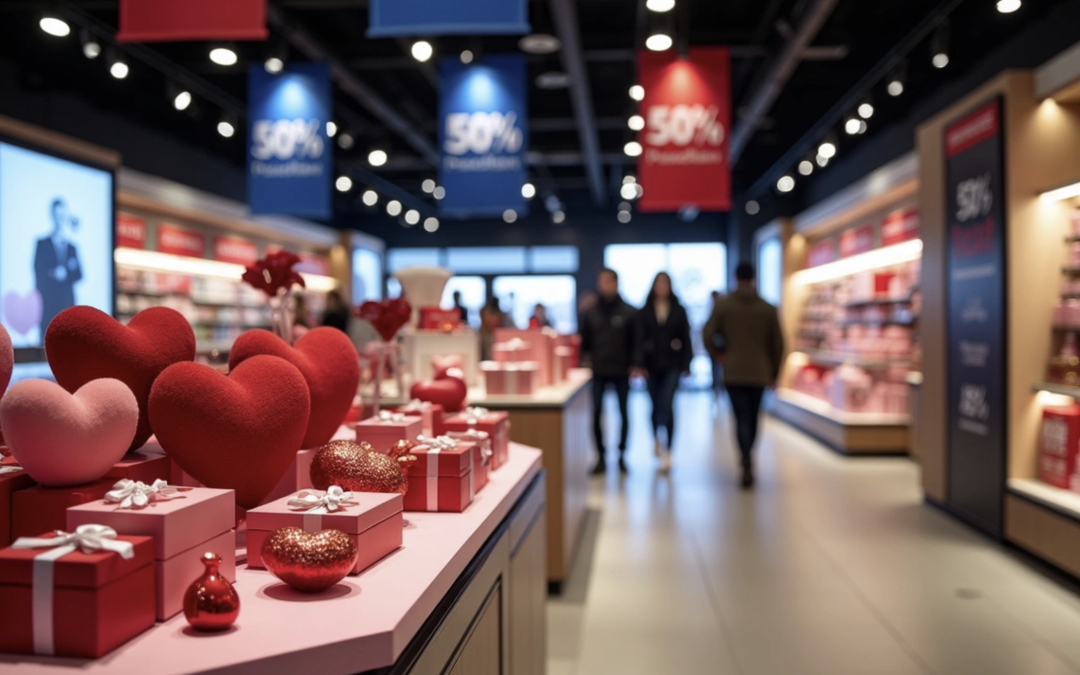
February sits between the post-holiday slump and spring shopping season. Most ecommerce store owners treat it as a dead month—clear leftover inventory, run a quick Valentine’s Day sale, and wait for warmer weather.
That’s a mistake. February is one of the most emotionally charged shopping months of the year. Valentine’s Day alone drives over $29 billion in U.S. consumer spending, with roughly 38% of that happening online. Presidents’ Day weekend generates an estimated $22 billion in retail spending. The Super Bowl creates a surge of party-related purchasing. And niche holidays like Galentine’s Day, National Love Your Pet Day, and Random Acts of Kindness Day give ecommerce brands creative angles that competitors overlook.
The stores that win February aren’t running one Valentine’s Day promotion. They’re running a full month of targeted campaigns, each tied to a specific event, each speaking to a specific customer motivation.
This guide gives you a complete February marketing playbook: a day-by-day event calendar, ready-to-adapt slogans and email subject lines for every major February moment, the writing formulas behind high-performing subject lines, and the testing framework to figure out what works for your specific audience.
The February Ecommerce Calendar: Every Date Worth Marketing
Before writing a single slogan, map out what’s happening in February. Each event attracts a different shopper mindset—and each one is an opportunity to send a targeted campaign instead of a generic “February Sale” email that gets ignored.
February 1 — Black History Month begins Runs the entire month. An opportunity to celebrate, educate, and spotlight Black-owned brands or creators in your space. Cause-aligned campaigns resonate with values-driven shoppers.
February 2 — Groundhog Day A lighthearted hook for playful brands. Quirky angle: “Don’t let these deals hibernate” or “Six more weeks of savings.”
First or second Sunday — Super Bowl Sunday One of the biggest single-day consumer events of the year. Even if you don’t sell football gear, the party-supply, food, apparel, and home entertainment categories all spike. Great for flash sales tied to game-day energy.
Early-to-mid February — Lunar New Year (date varies by year) Critical for stores with international audiences or Asian-market products. Gift-giving is central to the holiday. Red-and-gold themed campaigns, lucky-themed discounts (8% off, 88% of second item), and Lunar New Year gift guides all perform well.
February 7 — National Send a Card to a Friend Day Niche, but useful for stationery, gift box, and personalized product brands.
February 13 — Galentine’s Day Celebrating female friendships. Originally from the TV show Parks and Recreation, now a mainstream shopping event. Gift bundles, “treat yourself” positioning, and “for your girls” messaging work well. Retailers report strong social media engagement around Galentine’s campaigns.
February 14 — Valentine’s Day The main event. Consumers spend roughly $200 per person on average. Top spending categories: jewelry ($7 billion total), evenings out ($6.3 billion), clothing ($3.5 billion), flowers ($3.1 billion), and candy (purchased by over 56% of shoppers). Importantly, 83% of celebrants buy for romantic partners, but 58% also buy for family members—and pet gifting is rising fast, with spending on pet gifts projected around $2.1 billion.
Third Monday — Presidents’ Day A major sales weekend. RetailMeNot data shows 46% of consumers plan to shop during Presidents’ Day sales. Top categories: furniture, mattresses, home appliances, electronics, and winter apparel clearance. Discounts often reach 25–70%, making this the first “big deal” weekend of the year after the holidays.
February 17 — Random Acts of Kindness Day Great for gift card promotions, “buy one give one” offers, or surprise discount codes sent to loyal customers.
February 20 — National Love Your Pet Day For pet product brands, this is a goldmine. Feature customer pet photos alongside special offers for high engagement and social sharing.
American Heart Month (all month) Health and wellness brands can tie promotions to heart health awareness. Cause marketing—donating a percentage of sales to heart-health organizations—adds authenticity.
February Sales Slogans by Event: 40+ Ready-to-Adapt Examples
Below are slogans and email subject lines grouped by February event. Each set includes variations for different tones (playful, urgent, value-driven) so you can pick what fits your brand voice.
Valentine’s Day slogans and subject lines
- Fall in Love with These Deals (Before They’re Gone)
- Gift Smarter This Valentine’s Day — Shop Our Curated Picks
- Still Looking for the Perfect Gift? We’ve Got You
- Roses Are Red, Our Prices Are Too Good to Be True
- Last Call for Valentine’s Delivery — Order by Midnight
- Treat Your Person (and Yourself) — Valentine’s Savings Inside
- Don’t Panic — Same-Day Valentine’s Gifts Under $50
- Love Is in the Air. So Are Free Shipping Codes.
Pro tip: Valentine’s subject lines that mention a specific benefit (“Under $50,” “Free Shipping,” “Arrives by Feb 14”) consistently outperform vague emotional lines. The urgency is built into the calendar—shoppers already feel the time pressure. Your job is to remove friction, not add more emotion.
Galentine’s Day slogans
- Galentine’s Gift Guide: Picks Your Best Friend Actually Wants
- For the Girls: Galentine’s Bundles Starting at $25
- Celebrating Friendship (and 20% Off) This Galentine’s Day
- Your BFF Deserves Better Than Drugstore Chocolate
Presidents’ Day slogans
- Presidential Savings: Up to 40% Off This Weekend Only
- Presidents’ Day Clearance — Winter’s Best, at Winter’s Lowest Prices
- The Only Long Weekend Sale Worth Waking Up For
- Commander-in-Savings: Extra 25% Off Sitewide
- Presidents’ Day Preview: Early Access for VIP Customers
Super Bowl slogans
- Game Day Essentials — Score Big Before Kickoff
- Super Bowl, Super Sale: 30% Off Through Sunday
- Halftime Show? More Like Half-Price Show
- Stock Up for Game Day — Free Shipping on Orders Over $50
Groundhog Day slogans
- Don’t Let These Deals Hibernate — Groundhog Day Sale
- Groundhog Day, Groundbreaking Prices
- Punxsutawney Says: Six More Weeks of Savings
- Same Great Deals, No Shadow of a Doubt
National Love Your Pet Day slogans
- Spoil Your Fur Baby — 25% Off Pet Favorites
- They Love You Unconditionally. Love Them Back with These Deals.
- Because Your Pet Deserves a Valentine Too
- Love Your Pet Day: New Arrivals for Good Boys and Girls
Lunar New Year slogans
- Lucky Finds for the New Year — Shop Our Lunar New Year Collection
- Ring In the Lunar New Year with 18% Off Everything
- New Year, New Favorites — Lunar New Year Gift Guide Inside
- Wishing You Prosperity (and Free Shipping)
Random Acts of Kindness Day slogans
- Surprise Someone Today — Free Gift Wrapping on All Orders
- A Little Kindness Goes a Long Way — Share 15% Off with a Friend
- Random Act of Savings: Here’s a Code You Didn’t Expect
- Buy One, Give One: Celebrate Kindness Day with Us
Black History Month slogans
- Celebrating Black History Month: Spotlighting Creators We Admire
- Heritage, History, and Heart: Our Black History Month Collection
- Support and Shop: 10% of Sales to (Organization Name) This Month
General February slogans
- February Doesn’t Have to Be Boring — New Arrivals Inside
- Beat the Winter Blues: Fresh Finds for a Fresh Month
- Short Month, Big Savings
- Warm Up to Something New This February
- February Flash Sale: 48 Hours, Up to 50% Off
The Five Subject Line Formulas That Work for Ecommerce
Instead of guessing, use these proven structures. Each formula taps into a different psychological trigger. Mix and match them across your February campaigns.
Formula 1: The Curiosity Gap
Hint at something interesting without revealing everything. The reader opens the email to close the gap.
Structure: Tease + incomplete information
Examples:
- “The Valentine’s gift everyone’s asking about”
- “We almost didn’t run this sale”
- “You won’t believe what we’re marking down for Presidents’ Day”
When to use: Product launches, surprise sales, new collection reveals.
Formula 2: The Specific Benefit
State the exact value the reader gets. No fluff. Works especially well for price-sensitive shoppers.
Structure: Specific offer + clear qualifier
Examples:
- “Valentine’s gifts under $30 — arrives by Feb 14”
- “Presidents’ Day: 40% off everything, 3 days only”
- “Free shipping + free returns this weekend”
When to use: Every promotional email should have at least one specific-benefit version in its A/B test.
Formula 3: The Urgency Trigger
Create time pressure. But make it real—false urgency erodes trust fast.
Structure: Time constraint + action verb
Examples:
- “Last chance: Valentine’s delivery cutoff is tonight”
- “48 hours left — Presidents’ Day sale ends Monday”
- “Going, going… our best February deals expire at midnight”
When to use: End-of-sale reminders, shipping deadline alerts, limited-stock notifications.
Formula 4: The Personal Touch
Use personalization tokens (first name, past purchase category, location) to make the subject line feel one-to-one.
Structure: Name/detail + relevant offer
Examples:
- “(Name), your Valentine’s Day picks are waiting”
- “Based on your last order: gifts they’ll actually love”
- “Still thinking about that (product)? It’s 20% off today”
When to use: Segmented campaigns, browse/cart abandonment follow-ups, VIP customer emails.
Research shows personalized subject lines can increase open rates by up to 50%. But the personalization has to be relevant—a first name alone isn’t enough if the offer doesn’t match the recipient’s interests.
Formula 5: The Rhyme or Wordplay
Rhyming and alliteration make slogans more memorable. Only about 4% of marketing emails use rhymes, so this technique still stands out.
Structure: Sound pattern + brand-relevant message
Examples:
- “Fantastic February Finds”
- “Love the Look, Love the Price”
- “Presidential Prices That Entice”
- “Spread the Love, Save on the Stuff You Love”
When to use: Brand-building campaigns, social media cross-promotions, lighter-tone newsletters.
Preheader Text: The Line Most Ecommerce Stores Ignore
The preheader is the preview text that appears next to (or below) your subject line in the inbox. On mobile—where over half of all emails are opened—it’s the second thing people read before deciding whether to tap.
Adding preheader text increases open rates by roughly 14% on average. Yet most ecommerce emails either leave the preheader blank (letting the email client pull random text from the email body) or repeat the subject line (wasting the extra real estate).
How to write a good preheader:
The preheader should complement the subject line, not repeat it. Think of them as a one-two punch:
- Subject: “Valentine’s Gifts Under $30” Preheader: “Free shipping + arrives by Feb 14. No stress.”
- Subject: “Presidents’ Day Sale: Up to 40% Off” Preheader: “Our biggest Q1 discount. Ends Monday at midnight.”
- Subject: “(Name), we picked these for you” Preheader: “Based on your last 3 orders — new arrivals you’ll love.”
Keep preheaders under 90 characters. On mobile, anything beyond about 35–40 characters may get cut off depending on the device and email client.
How to A/B Test Your February Subject Lines
A/B testing sounds technical but most ecommerce email platforms (Klaviyo, Mailchimp, Omnisend) have built-in tools that make it simple. Here’s how to run a clean test:
Step 1: Choose one variable. Only change the subject line between Version A and Version B. Keep the email body, send time, and audience segment identical. If you change multiple things, you won’t know what caused the difference in results.
Step 2: Split a test group. Send Version A to 15% of your list and Version B to another 15%. The remaining 70% will receive whichever version wins.
Step 3: Set a winning metric. For subject line tests, open rate is the primary metric. But also track click-through rate—a subject line that gets opens but no clicks may be misleading (clickbait effect).
Step 4: Wait for statistical significance. Most email platforms will tell you when a result is statistically significant. As a rule of thumb, let the test run for at least 4 hours before declaring a winner. For smaller lists (under 5,000 subscribers), you may need 24–48 hours.
Step 5: Send the winner. The platform automatically sends the winning version to the remaining 70% of your list.
What to test across your February campaigns:
- Emoji vs. no emoji (emojis don’t always help—test it for your audience)
- Specific discount (“25% off”) vs. vague benefit (“huge savings”)
- Urgency phrasing (“last chance”) vs. curiosity phrasing (“you’ll want to see this”)
- Personalized (first name) vs. non-personalized
- Short (under 40 characters) vs. medium-length (50–65 characters)
Run one test per campaign. Over the course of February’s multiple events, you’ll build a clear picture of what resonates with your specific audience.
Segmenting Your February Campaigns by Customer Type
The same slogan doesn’t work equally well for every customer. Segmentation is what separates ecommerce stores that send emails from ecommerce stores that make money from emails.
New subscribers (haven’t purchased yet)
These people joined your list but haven’t converted. February campaigns should reduce perceived risk and lower the barrier to a first purchase.
Slogans that work: Offers with strong value and low commitment.
- “Your first order ships free — just in time for Valentine’s Day”
- “New here? Here’s 15% off to welcome you this February”
Repeat customers
They’ve already bought from you. They trust you. February campaigns should reward loyalty and introduce new products.
Slogans that work: Exclusivity and early access.
- “VIP early access: Presidents’ Day deals before everyone else”
- “Because you’re one of us — an extra 10% off our Valentine’s picks”
Lapsed customers (haven’t purchased in 90+ days)
They’ve gone quiet. February’s emotional events give you a natural excuse to re-engage.
Slogans that work: “We miss you” framing + a strong incentive.
- “We haven’t heard from you in a while — here’s 20% to come back”
- “Remember us? We saved something special for Valentine’s Day”
High-value customers (top 10% by spend)
These customers drive a disproportionate share of revenue. Don’t dilute their experience with mass-market messaging.
Slogans that work: Concierge-style messaging.
- “(Name), your personal Valentine’s Day gift guide is ready”
- “Exclusive: first look at our limited Valentine’s collection — for our best customers only”
Mobile Optimization: Where Most February Emails Are Read
More than half of all emails open on mobile devices. If your February slogans look great on desktop but get cut off on a phone screen, they’re failing where most of your audience actually sees them.
Subject line length for mobile: Most mobile email clients display 35–40 characters before truncating. Front-load the most important words. “Valentine’s Gifts Under $30 — Free Shipping” is better structured as “Under $30: Valentine’s Gifts + Free Shipping” because the price point (the hook) shows up first even if the rest gets cut.
Preview text on mobile: The preheader text is even more visible on mobile than desktop. On many phones, it’s the same font size as the subject line. Treat it as part of your headline, not an afterthought.
CTA button size: When the reader does open on mobile, make your call-to-action button large enough to tap easily. Apple’s guidelines recommend a minimum of 44×44 points. A button that’s too small frustrates mobile shoppers and kills conversion.
Common Mistakes That Hurt February Campaigns
Using the same slogan for every segment
A 22-year-old buying a Galentine’s gift for her roommate and a 55-year-old buying anniversary jewelry for his wife are both “February shoppers.” They need completely different messaging. One-size-fits-all slogans underperform segmented campaigns by a wide margin.
Relying on clichés without adding specificity
“Something for everyone this February” says nothing. “34 Valentine’s gifts under $50, ready to ship tomorrow” says everything. Generic slogans sound empty because every competitor uses them. Specificity is what makes a slogan feel real. Let your products and pricing do the persuading—phrases like “the best deals ever” just trigger skepticism.
Ignoring shipping deadlines
For Valentine’s Day especially, the shipping cutoff is the most important piece of information in your email. If the deadline passes and the customer didn’t know, you’ve lost the sale AND the trust. Make the cutoff date prominent—in the subject line, in the preheader, and in the email body. Do not bury it.
Running only one February campaign
Valentine’s Day is not the only event in February. Stores that run 4–6 campaigns across different February moments (Super Bowl, Galentine’s, Valentine’s, Presidents’ Day, a cause-marketing campaign, a flash sale) generate more total revenue than stores that pin everything on a single Valentine’s promotion. Each campaign reaches a slightly different motivation in your customer base.
Sending without testing
Every email platform offers A/B testing. Not using it means you’re guessing which slogan works instead of measuring it. Even a small list (1,000+ subscribers) can produce meaningful A/B test results if you give it enough time.
Building Your February Campaign Calendar
Here’s a practical timeline for planning and executing February campaigns. Adjust the specific dates each year based on when events fall.
Late January (1–2 weeks before February):
- Finalize your February event calendar and decide which events to campaign around
- Write and schedule Lunar New Year and early February campaigns
- Begin teasing Valentine’s Day in email footers and social media
February 1–5:
- Launch Black History Month and American Heart Month campaigns (if applicable to your brand)
- Send Groundhog Day flash sale (Feb 2)
- Begin Super Bowl countdown content and promotions
Super Bowl weekend:
- Run a 48-hour Super Bowl sale
- Send pre-game and post-game emails
February 7–12:
- Ramp up Valentine’s Day campaigns: gift guides, last-minute picks, shipping deadline reminders
- Launch Galentine’s Day campaign (Feb 13 delivery focus)
February 13–14:
- Send “last chance for Valentine’s delivery” email (subject line: urgency formula)
- Day-of Valentine’s email: pivot to digital gifts, gift cards, experience-based offers for last-minute shoppers
February 15–17:
- Transition to Presidents’ Day messaging
- Random Acts of Kindness Day campaign (Feb 17)
Presidents’ Day weekend:
- Run your biggest non-Valentine February promotion
- Clearance and winter-to-spring transition sales
February 20–28:
- National Love Your Pet Day campaign (Feb 20)
- End-of-month wrap-up: “Last days of February savings” or early spring preview
Throughout February:
- Test one subject line variable per campaign
- Review open rates and CTR after each send
- Feed learnings from early-month tests into later-month campaigns
Making February Work for Your Store
February gives ecommerce stores more marketing surface area than most owners realize. Valentine’s Day gets all the attention, but the stores that consistently outperform in February are the ones running targeted campaigns across multiple events—each with slogans matched to the right audience segment, tested before full deployment, and optimized for mobile inboxes.
The slogans and formulas in this guide are starting points, not final copy. Take the ones that fit your brand, adapt the language to match your products and voice, test them against each other, and let your audience’s behavior tell you what works.
February is 28 days. That’s at least six distinct campaign opportunities, thousands of emails, and a meaningful revenue window between the holiday hangover and spring. Use all of it.
-150x150.png)