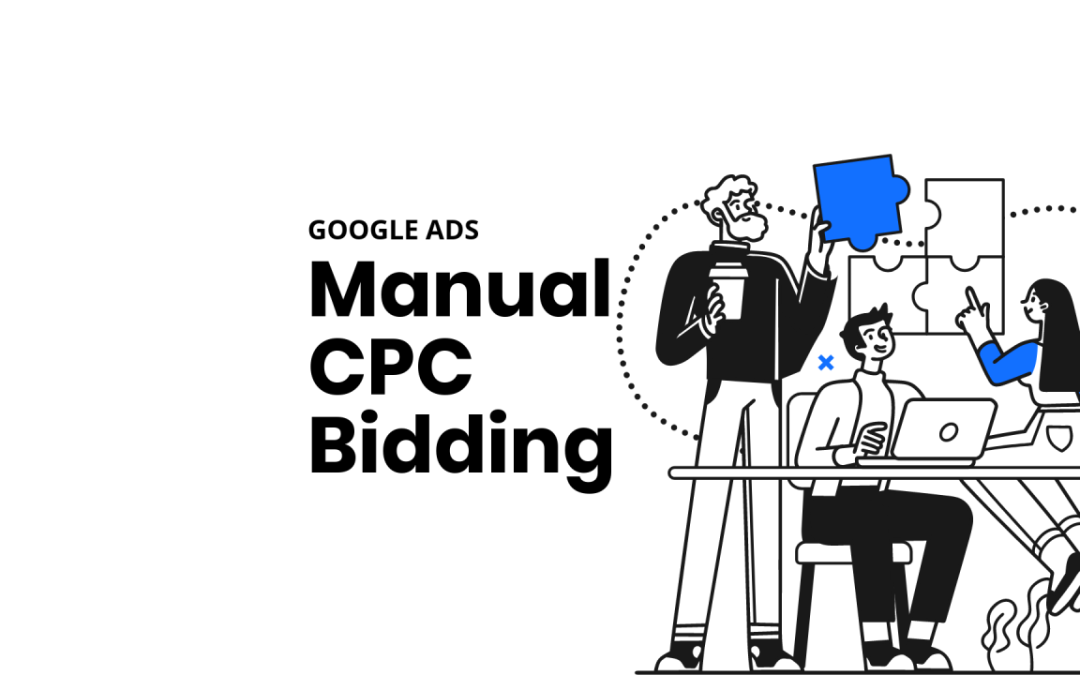
Google Ads manual CPC puts you in complete control of your click costs for advertisements. Setting up campaigns brings advertisers to a crucial choice between manual bid settings and Google’s automated system.
Google claims automated bidding works better than Manual CPC because it “takes much of the heavy lifting and guesswork out of setting bids to meet your performance goals”. The reality isn’t that straightforward. Manual CPC bidding gives you a distinct advantage that allows precise control over advertising costs. Advertisers with tight budgets below $20 per day per campaign or newcomers with limited data will find manual CPC more beneficial than smart bidding.
This piece compares both strategies objectively to help you pick the right approach for your needs. You’ll get clear guidance based on real-life performance factors instead of theoretical benefits, whether you’re choosing between manual CPC Google Ads settings or automated options like maximize clicks.
What is Manual CPC and Smart Bidding?
Picking the right bidding strategy in Google Ads requires you to know the basic differences between manual and automated approaches. Your campaign’s success depends on it.
Definition of Manual CPC
Manual Cost-Per-Click (CPC) bidding lets you take full control of your advertising campaign. You decide the maximum amount you’ll pay each time someone clicks your ad. It’s like setting a spending limit while keeping track of every dollar spent.
This 15-year old bidding method gives advertisers detailed control over their campaigns. You can set different bids for each ad group or even specific keywords and placements. This precision becomes valuable especially when you have keywords that perform better than others.
The concept behind Manual CPC is straightforward – you pay only after someone clicks your ad. The actual cost usually stays below your maximum bid because Google’s auction system charges just enough to outbid your closest competitor.
Definition of Smart Bidding
Smart Bidding showcases Google’s advanced automated bidding system that runs on sophisticated machine learning algorithms. This subset of automated bidding strategies focuses on optimizing conversions or conversion value.
Smart Bidding stands out with its “auction-time bidding” feature that adjusts your bids for every auction in live. The system looks at many signals including:
- Device type
- Location
- Time of day
- Language
- Operating system
- User intent and interests
Google’s Smart Bidding strategies include:
- Target CPA (Cost Per Acquisition): Sets bids to get as many conversions as possible at your target cost per action
- Target ROAS (Return On Ad Spend): Aims to achieve your desired return on ad spend
- Maximize Conversions: Uses your budget to get the most conversions possible
- Maximize Conversion Value: Focuses on getting the highest value conversions within your budget
- Enhanced CPC: Adjusts manual bids based on conversion likelihood
How they differ in control and automation
The biggest difference between these strategies comes down to who makes the bidding decisions. Manual CPC puts you in charge of all bidding choices based on your analysis and strategy. Smart Bidding hands these decisions over to Google’s AI systems.
You’ll find a clear difference in control levels too. Manual CPC shows you exactly what you’re bidding and why. Smart Bidding works more like a black box – you see results but might not understand why each bid gets adjusted.
These strategies need different amounts of data. Smart Bidding runs on historical data and needs at least 30 conversions in a 30-day period to work well. Manual CPC works fine even without any conversion history.
Your campaign’s specific needs often determine the best choice. New campaigns, niche markets, or situations needing tight budget control work better with Manual CPC. Smart Bidding shines with established campaigns that have lots of conversion data, and it’s great for advertisers who want to scale efficiently.
Manual CPC vs Smart Bidding: Key Differences
Let’s explore why advertisers pick either manual CPC or Smart Bidding based on their campaign needs and maturity level.
Control and transparency
The biggest difference between manual CPC and Smart Bidding comes down to control. google ads manual cpc gives you full control over your bid adjustments. You decide exactly what to pay for each click and allocate your budget with precision. You can see what you’re paying and understand the reasoning behind each cost.
Smart Bidding works more like a black box. The system packs plenty of power but doesn’t show its work. One expert puts it this way: “You don’t always see why Google adjusts your bids, making it harder to diagnose issues or fine-tune performance”. This lack of clarity can make it tough to fix campaign problems.
Data requirements
These two approaches handle data very differently. Smart Bidding runs on lots of conversion data—you’ll need at least 30 conversions in the past 30 days to get good results. The system doesn’t work well without enough historical data to guide its decisions.
Manual CPC shines even with limited data. It works great when you:
- Launch new campaigns without conversion history
- Work with niche keywords or small audiences
- Test new markets before growing
In fact, manual CPC works better during early campaign stages while you gather performance data.
Performance predictability
Each strategy brings its own reliability factors to the table. Manual CPC delivers steady results when market conditions stay stable. You won’t see unexpected changes unless you make them yourself. Advertisers who want reliable, predictable outcomes love this approach.
Smart Bidding can be more unpredictable, especially during learning phases. The system takes two to three weeks to stabilize after big changes to budgets or goals. Changes to campaign settings can also restart the learning process, which leads to temporary performance swings.
Manual CPC stands out as the only bidding strategy where results improve steadily as you spend more, showing a direct link between budget size and performance.
Ease of use
Time and expertise requirements vary between these approaches. Manual bidding needs constant attention and regular tweaks. Managing thousands of keywords by hand gets harder as campaigns grow, and mistakes can happen. You’ll need solid PPC knowledge and hands-on management skills.
Smart Bidding cuts down management time. The system adjusts bids automatically using live data about devices, timing, location, and user behavior. This automation helps a lot, especially with big accounts running multiple campaigns.
The system isn’t completely hands-off though. You still need proper setup, accurate conversion tracking, and regular checks to match business goals. Manual CPC gets more time-consuming as campaigns grow, while Smart Bidding handles scale better.
Your choice depends on your situation, resources, and goals. Many advertisers use both strategies – manual CPC where they want tight control and Smart Bidding where automation makes more sense.
When to Use Manual CPC in Google Ads
Smart Bidding automates a lot, but google ads manual cpc works better in several specific cases. You should know these situations to make better decisions about controlling your bids directly.
New campaigns with no conversion data
Manual CPC bids are a great way to get started with fresh campaigns that lack performance history. Smart Bidding needs at least 30 conversions in a 30-day period to work. Many experts suggest you should wait for 45-60 conversions before switching to automation. Automated systems just make educated guesses without this data, which leads to wasted spending.
A manual approach lets you do these things early on:
- Collect data right away instead of waiting for the system to “learn”
- Adjust bids quickly based on what you see working
- Build up enough performance data to switch to Smart Bidding later
Tight budget control
Manual CPC gives you the best control when you have limited funds. Automated bidding can eat through budgets faster while chasing conversions. Setting your maximum cost-per-click manually puts a hard stop on spending.
This works really well for campaigns with daily budgets under $20. You can keep your ads showing up all month instead of running out of money too soon. It also lets you put more money into keywords that you know perform well, which helps you get the most from your budget.
Brand and competitor targeting
Brand campaigns and competitive keyword targeting do better with Manual CPC. Your branded searches convert better anyway, so you just need steady visibility at good prices.
Manual bidding on brand terms can cut your CPCs by 30-70% while maintaining results. This happens because people searching for your brand already want to buy, so smart bidding’s optimization doesn’t add much value.
Low-volume or niche keywords
Niche markets and specialized keywords with low search volume present the strongest case for manual CPC. Automated systems struggle when they don’t have enough data to make good decisions.
Your business knowledge often beats what algorithms can figure out in these cases. Research shows that campaigns for specialized products or services get better results with manual CPC than automated bidding that’s trying to work with limited data.
Small B2B markets or very specific products need human insight. You understand these keyword values better than any automation working with just a few data points.
When Smart Bidding Makes More Sense
Manual CPC provides precision in specific scenarios, but Smart Bidding excels when its AI-powered approach can deliver better results. Advertisers need to know these scenarios to decide between automation and hands-on control.
Campaigns with strong conversion history
Smart Bidding needs enough data to work. Google recommends having at least 30 conversions in the past 30 days. Target ROAS works best with at least 50 conversions during that time. The algorithms can’t make good bidding decisions without this baseline data.
Your campaign can substantially outperform manual cpc approaches once it builds this conversion foundation. Some experts suggest thinking about Smart Bidding with just 5-10 conversions per month, though official guidelines recommend waiting longer to get the best results.
Large-scale accounts
Smart Bidding becomes more valuable as accounts get complex. Automation helps maintain consistency and performance without constant monitoring for advertisers who manage multiple campaigns or large accounts. This makes google ads manual cpc less practical as operations grow larger.
Large accounts benefit greatly from time savings. Smart Bidding handles thousands of keyword bid adjustments automatically based on performance patterns, which would be impractical to do manually.
Dynamic market conditions
Smart Bidding adapts to changing conditions better than manual approaches in ever-changing markets. The system adjusts daily and responds to seasonal changes, user behavior, and competition faster than human-managed bids.
Smart Bidding also responds to up-to-the-minute changes in competition, device type, or location during each auction. Black Friday or Christmas sales work well with this system because market conditions change quickly.
Multiple conversion goals
Smart Bidding offers advanced optimization capabilities for advertisers who need to balance various conversion objectives. The system handles complex scenarios such as:
- Optimizing for different attribution models, including evidence-based attribution
- Setting device-specific performance targets for mobile, desktop, and tablet
- Balancing conversion volume with conversion value
Moving from Maximize Conversions to Maximize Conversion Value makes sense if you track different-valued conversions. Advertisers who switch from target CPA to target ROAS typically see 14% more conversion value at similar return rates.
Smart Bidding needs proper setup—good conversion tracking, realistic targets, and patience through learning periods that last 1-2 conversion cycles. This system becomes a powerful tool that often outperforms google ads manual cpc vs maximize clicks when campaigns have consistent conversion data and these foundations in place.
Pros and Cons of Each Strategy
The choice between bidding strategies ended up being about knowing their strengths and limitations. Let’s get into what each approach brings to the table and where it might fall short.
Manual CPC: Pros and Cons
Pros:
- Complete control over bids – You set exact amounts to pay for each click, which leads to strategic bidding
- Flexibility and precision – Your ROI improves as you tweak bids based on performance data
- Better budget management – Your funds work harder by focusing on keywords that perform well
- Works without history – The system runs smoothly even without conversion data
Cons:
- Time-consuming – You must keep an eye on it and make regular tweaks
- Requires expertise – You should know your market and what drives performance
- Less automation – You might miss clicks that automated systems could catch
- Scaling difficulties – Large accounts with thousands of keywords become hard to handle
Smart Bidding: Pros and Cons
Pros:
- Time efficiency – Automation saves hours you’d spend on manual adjustments
- Immediate optimization – The system makes auction-time bids using signals advertisers can’t see
- Scales efficiently – Large accounts stay on track without constant attention
- Advanced pattern recognition – Google’s machine learning spots conversion opportunities
Cons:
- Reduced transparency – The system works like a “black box” with limited insight into decisions
- Learning period volatility – Results bounce around for 7-14 days after changes
- Data dependency – Success depends on solid conversion tracking and enough history
- Less control – Sometimes the AI misreads business context and what audiences want
Comparison table: Manual CPC vs Maximize Clicks
| Feature | Manual CPC | Maximize Clicks |
|---|---|---|
| Control | Full control over bids | Budget control and optional max CPC cap only |
| Optimization Goal | Your choice of metrics | Maximum clicks within your budget |
| Time Investment | High with regular tweaks needed | Low thanks to automation |
| Best Use Case | New campaigns, tight budget control | Getting traffic when conversion data is limited |
| Risk Level | Lower spending risk but might miss opportunities | Budget spends faster on less valuable clicks |
Conclusion
Your campaign needs and circumstances will determine the choice between manual CPC and Smart Bidding. Manual CPC works best when you need detailed control, have limited data, or must stick to strict budgets. Smart Bidding excels in campaigns that have a strong conversion history and advertisers who want to scale.
Top advertisers use both strategies in their different campaigns. Manual CPC proves effective for branded keywords and niche products. Smart Bidding takes care of campaigns with enough conversion data. This combined approach gives you precise control and automation exactly where you need them.
Both strategies have their limitations. Manual bidding takes more time but gives you clear insights and predictable results. Smart Bidding saves time but might not show you how it makes decisions.
Take an honest look at your campaign’s maturity, data availability, and management resources before deciding. New advertisers should start with manual CPC until they build enough performance history. Smart Bidding becomes a good option once your campaigns show steady conversions because it can optimize at scale.
The choice of bidding strategy isn’t about picking a winner. These approaches work as complementary tools in your advertising toolkit. Your campaigns can benefit from both methods as they grow and your business goals change.
FAQs
Q1. What’s the main difference between Manual CPC and Smart Bidding in Google Ads? Manual CPC gives advertisers full control over bid amounts, while Smart Bidding uses machine learning to automatically optimize bids for conversions or conversion value.
Q2. When should I use Manual CPC bidding? Manual CPC is best for new campaigns without conversion data, situations requiring tight budget control, brand and competitor targeting, and campaigns with low-volume or niche keywords.
Q3. In what scenarios does Smart Bidding perform better? Smart Bidding excels for campaigns with strong conversion history, large-scale accounts, dynamic market conditions, and when managing multiple conversion goals.
Q4. How much conversion data is needed for Smart Bidding to be effective? Generally, Smart Bidding requires at least 30 conversions in the past 30 days to function effectively. Some strategies, like Target ROAS, perform best with at least 50 conversions in that timeframe.
Q5. Can I use both Manual CPC and Smart Bidding strategies in my Google Ads account? Yes, many successful advertisers use both strategies across different campaigns. For example, you might use Manual CPC for branded keywords and niche products, while applying Smart Bidding to campaigns with sufficient conversion data.

-150x150.png)